Curtains & Drapery for Interior Designers
LuxiVeil makes curtains, drapery and blinds to measure for interior designers and architects in Antalya, Türkiye, with fabric samples before production, fullness to your specification and laser-cut patterns.
Last updated:
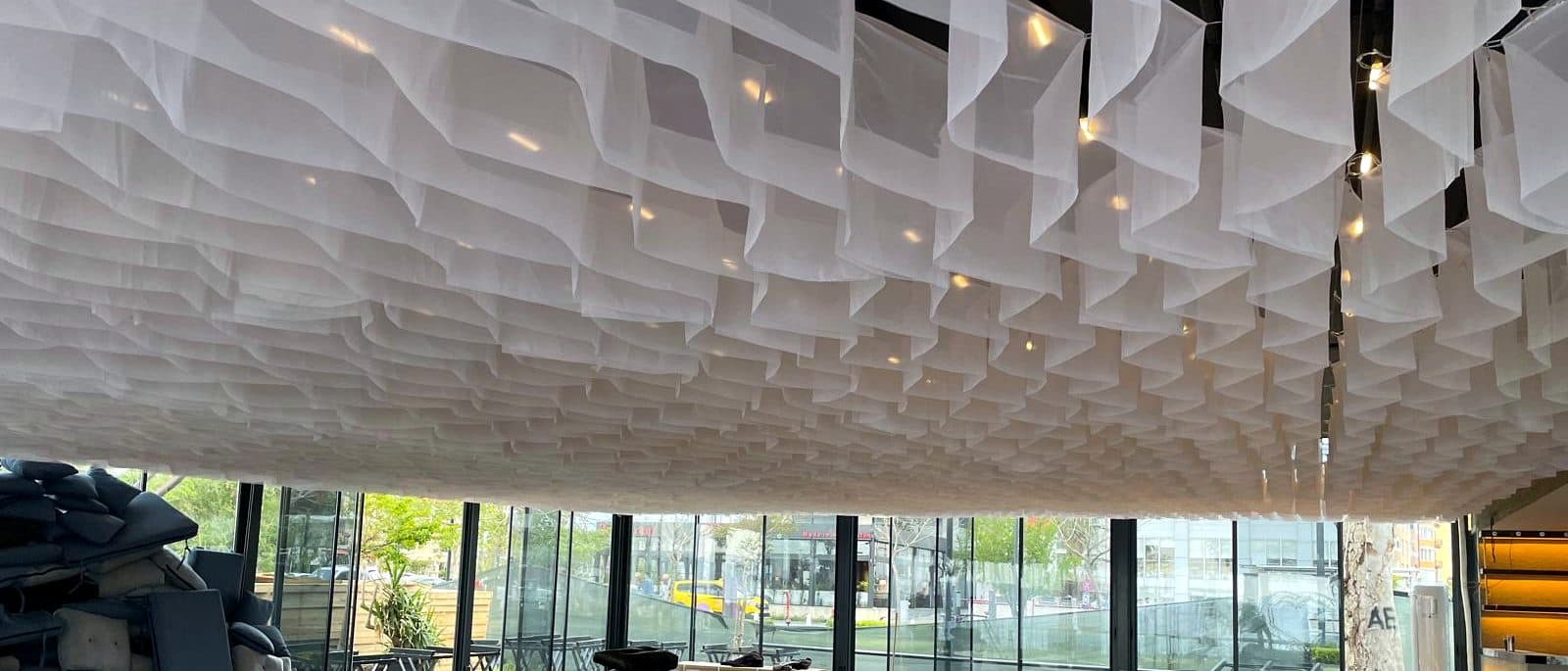
Curtains and Drapery for Interior Designers and Architects
LuxiVeil makes curtains, drapery and blinds to measure for interior designers and architects working on hotels, villas and turnkey residential projects. LuxiVeil is the export brand of Gökcan Home Tekstil, a curtain and blind workshop in Kepez, Antalya, Türkiye, producing since 1994. Each piece follows your specification and the measured window size, and fabric samples are approved before production.
For a designer, a window covering is part of the room's concept, not an accessory added at the end. This page explains how we support design projects, from fabric selection and fullness to custom patterns and motorized tracks, and what a good specification to us looks like.
Working Directly With a Curtain Manufacturer
This part covers our support, the project stages and the benefits of specifying direct.
How We Support Design Projects
Design projects usually start with a mood and a fabric. We send fabric samples for approval before production, so you and your client can see colour, transparency and texture in the actual room light. Once the fabric is chosen, the fullness of the curtains is made to your specification; for example, 80% pleating means 1.8 times the finished width in fabric.
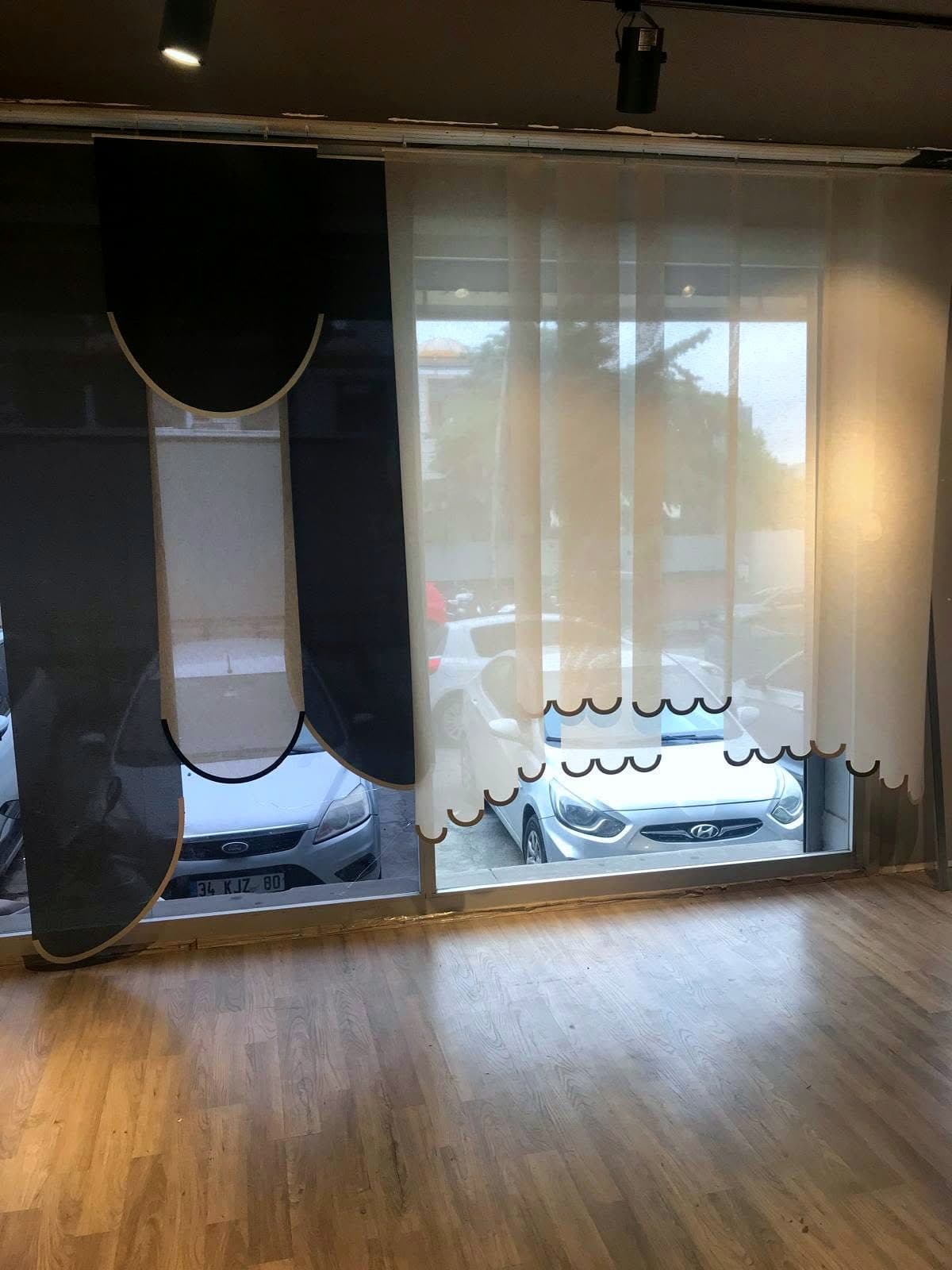
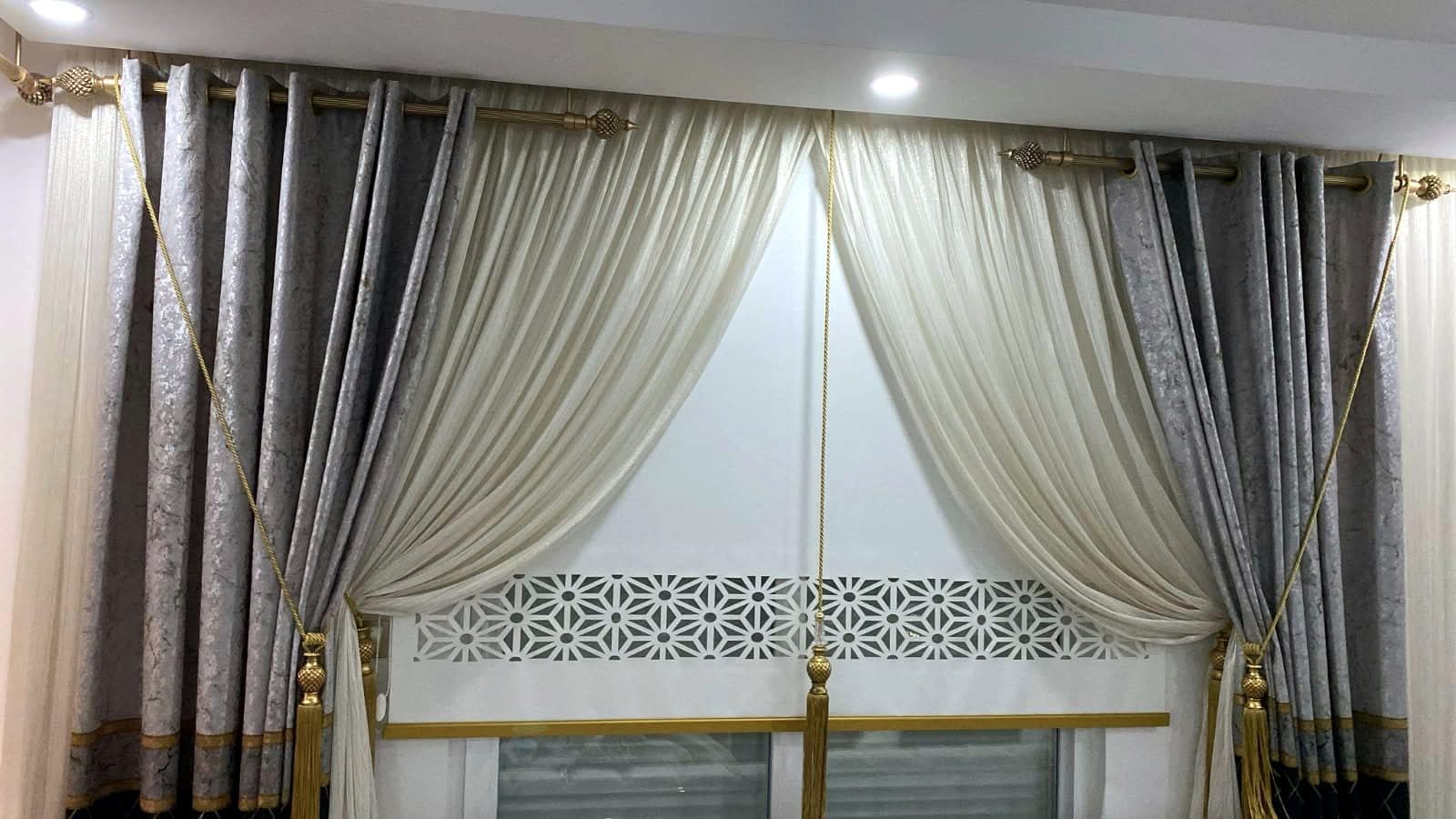
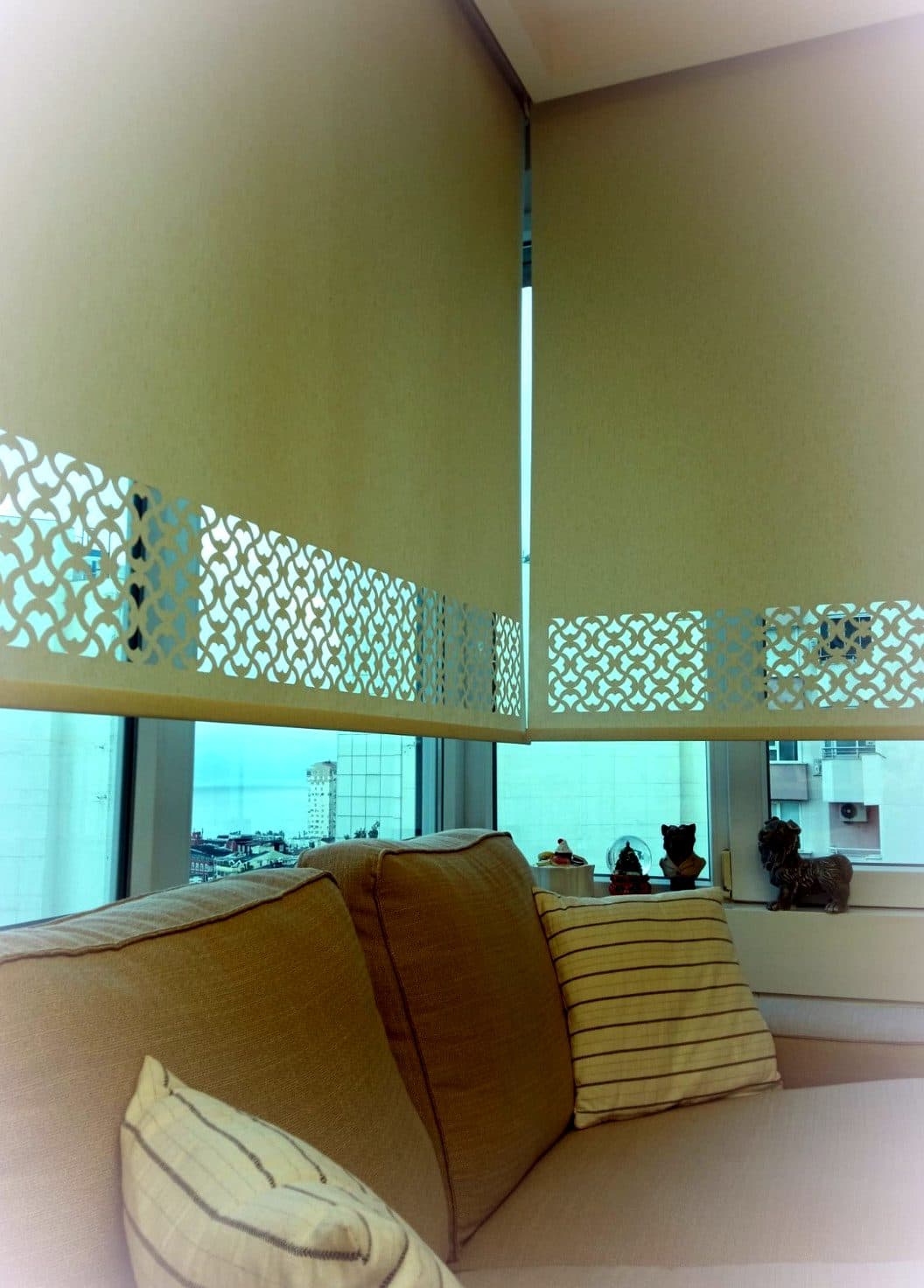
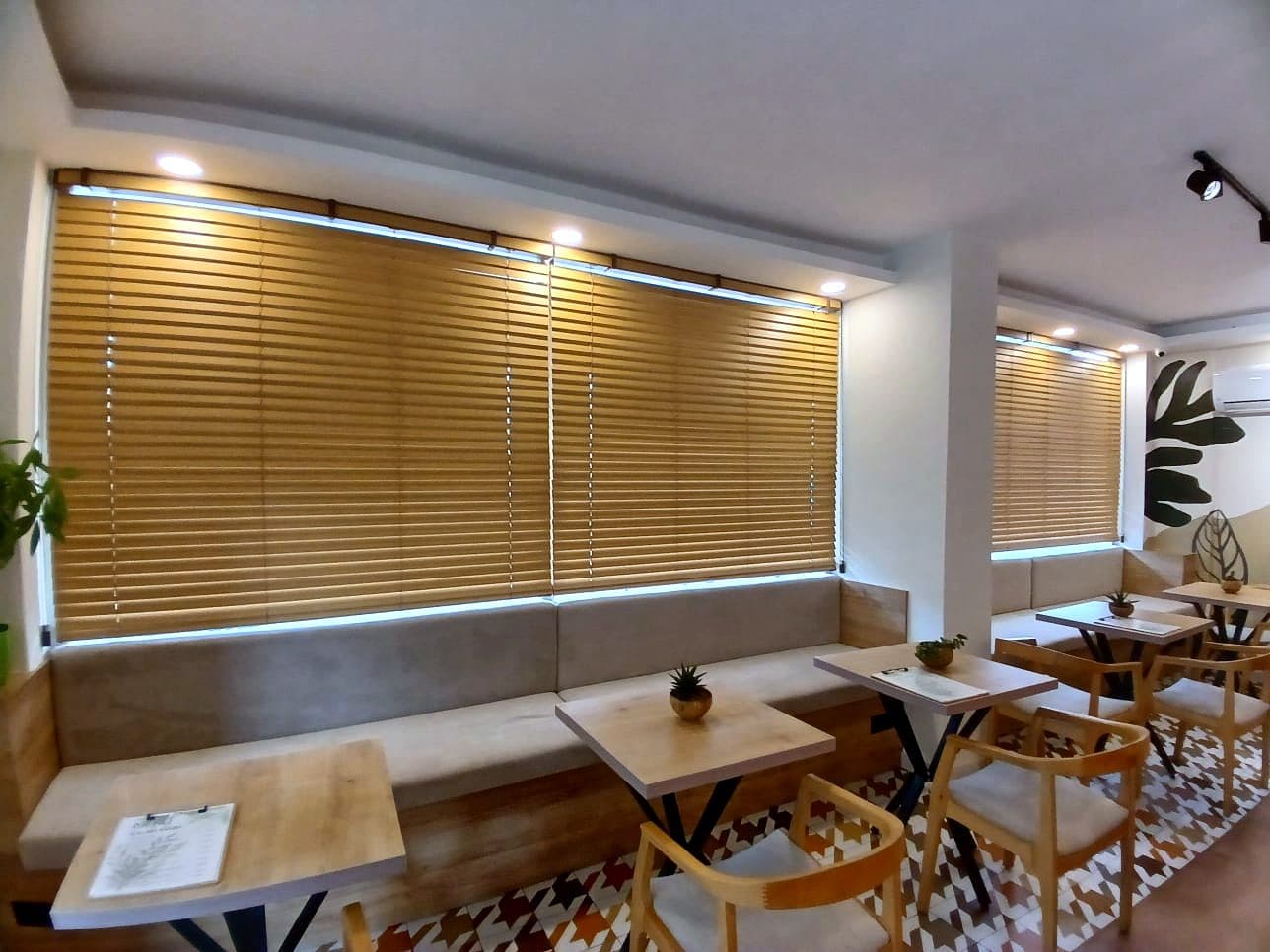
When a project needs a signature detail, laser cutting allows custom patterns drawn digitally from your design to be applied to roller blinds, vertical blinds and wooden blinds; our laser-cut blinds page shows how artwork, borders and logos become a cut pattern. Wooden venetian blinds with 50 mm slats can be ordered in real or faux wood and with decorative tape ladders for a softer, textile look. For curtains, sheer and blackout drapery can be combined on double tracks, manual or motorized.
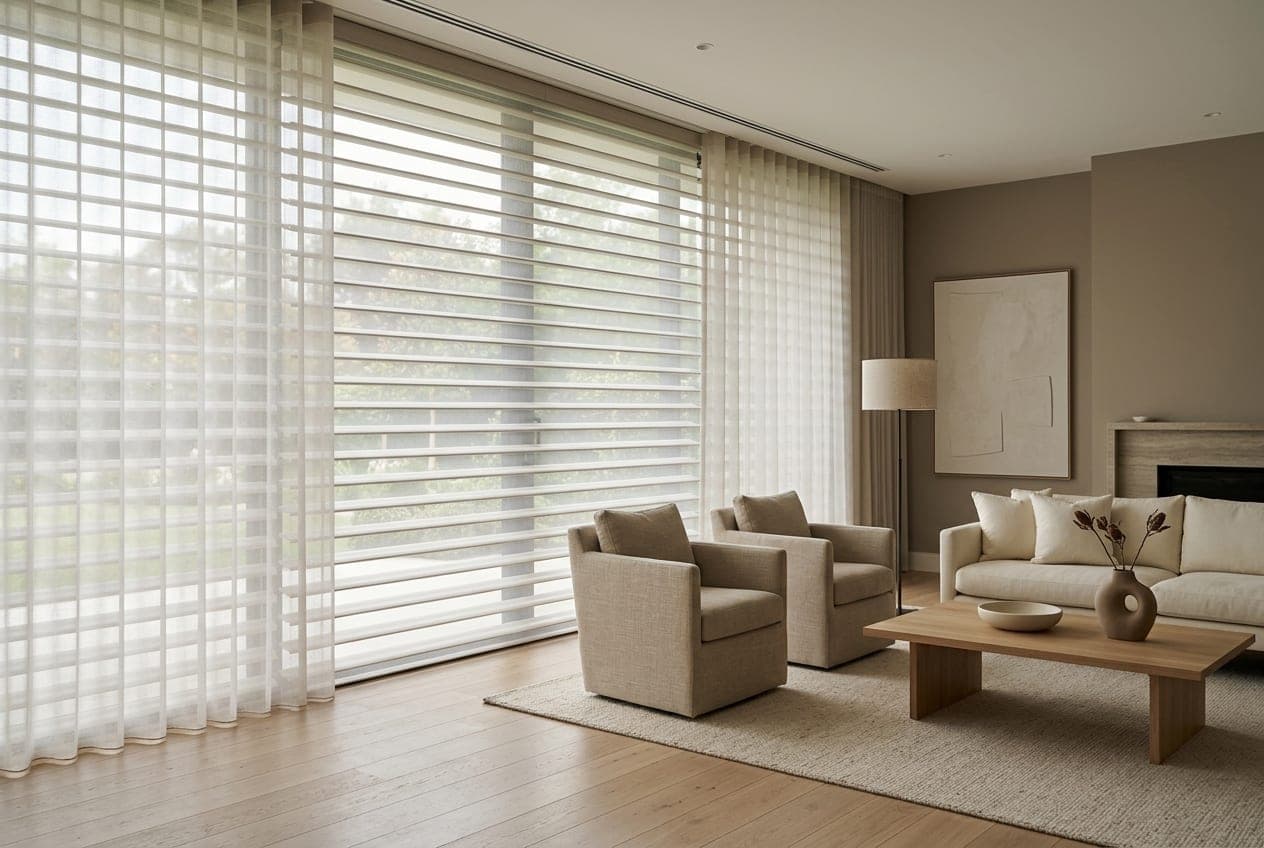
For floor-to-ceiling glazing, vertical blinds with rotating vanes can be made in mixed colours or in sloped versions for angled windows. Where a softer look is wanted, Picasso shades place soft fabric vanes between two sheer layers, giving the appearance of a sheer curtain with the light control of a blind.
We work with design studios on single villas as well as on full hotels. There is no fixed minimum order quantity, so a small residential project receives the same attention as a large one. Send us your drawings, finishes schedule or a list of windows, and we will prepare a quotation for the products you specify.
Working Together from Concept to Delivery
A design project moves through several stages, and window coverings are part of each one. During concept design, we can help you choose suitable product families for each room. When the fabric palette is developed, fabric samples are sent for approval. When drawings are finalised, the final measurements and the fullness specification are confirmed, and production can start.
During production, every item is made to the client's measurements in our workshop: fabric and aluminium profiles are cut to order, assembled and fitted with the manual or motorized mechanism, then packed and delivered. For larger projects, deliveries can be split into phases to follow the installation programme.
Many design studios work with us on a mix of products in the same project: sheer and blackout drapery on double tracks in bedrooms, wooden blinds with decorative tape ladders in studies, laser-cut roller blinds in a lobby or showroom. Bringing these together in one order keeps the details consistent across the whole interior. In kitchens and bathrooms, moisture-resistant aluminium blinds complete the scheme.
Why do designers specify window coverings directly with a manufacturer?
LuxiVeil (Gökcan Home Tekstil, Antalya, Türkiye) is the workshop that cuts, assembles and packs every curtain and blind it sells. A designer who specifies with us talks to the people who make the product, so a question about a fold, a pattern scale or a track detail gets a direct answer instead of passing through a reseller.
That matters most in the details a client notices. A specification can say "sheer, 80% fullness, double track", but the finished look depends on decisions taken during cutting and assembly. When the same team quotes, produces and answers your questions, your intent is less likely to be lost along the way.
Working directly also keeps a design language consistent from one commission to the next. The team learns which fabrics, fullness ratios and finishes your studio prefers. A new project can then start from your last approved details rather than from a blank page.
In Türkiye, the same workshop supplies the market under the ForsPer brand. For architects, design studios and international projects we work as LuxiVeil, the company's export brand.
Choosing Curtains, Fabrics and Fullness for a Scheme
Here we cover the product range, fabric sample approval and how to specify fullness.
Which window coverings can an interior designer specify from one workshop?
An interior designer can specify all main window-covering families from LuxiVeil: pleated drapery with tracks, roller, zebra, wooden, aluminium, vertical and pleated blinds, Picasso and vertical sheer shades, and outdoor zip screens. All are made to measure, and every category can be supplied motorized.
The table below groups the range by the role each product usually plays in a design scheme:
| Product | Design character | Typical place in a scheme |
|---|---|---|
| Pleated drapery (sheer and blackout) | Soft folds, layered textile look | Bedrooms, suites, living rooms |
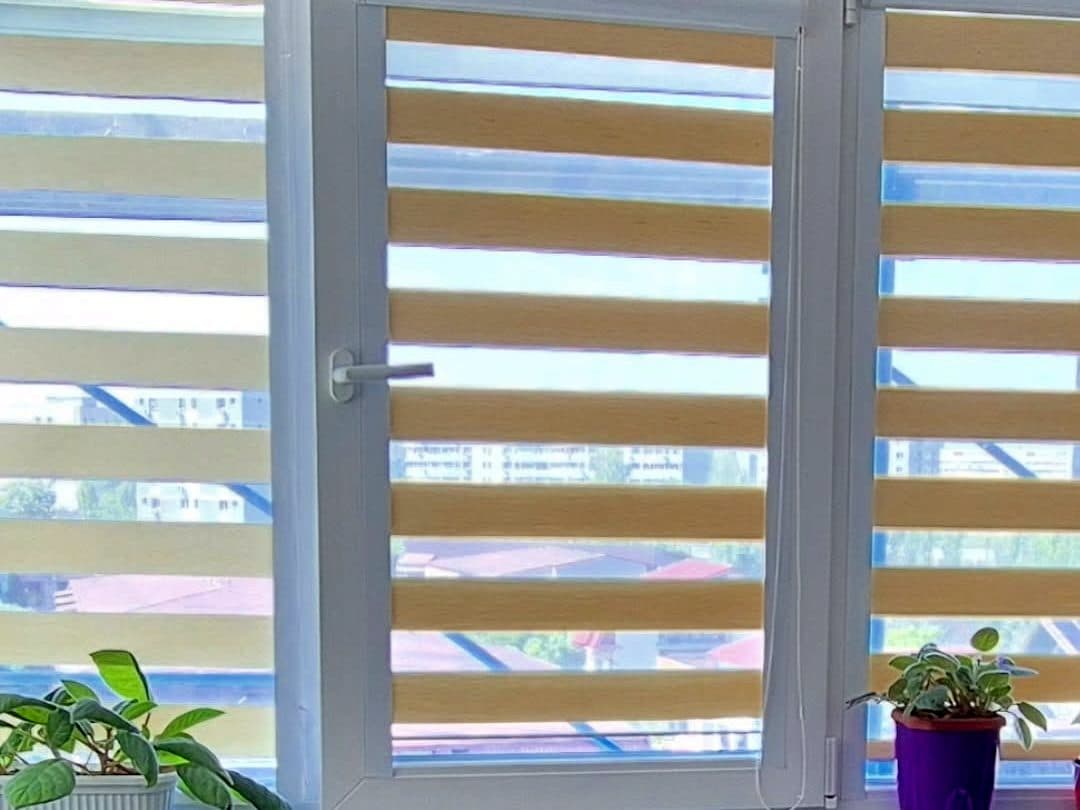
| Zebra (day & night) blinds | Banded fabric, clean modern line | Living areas, secondary rooms |
| Roller and blackout blinds | Flat fabric panel, minimal profile | Behind drapery, offices, media rooms |
| Wooden venetian blinds | Warm material, 50 mm slats | Studies, libraries, villa interiors |
| Aluminium venetian blinds | Crisp metal slats, moisture resistant | Kitchens, bathrooms, wet areas |
| Vertical blinds | Rotating vanes for tall glazing | Floor-to-ceiling and angled windows |
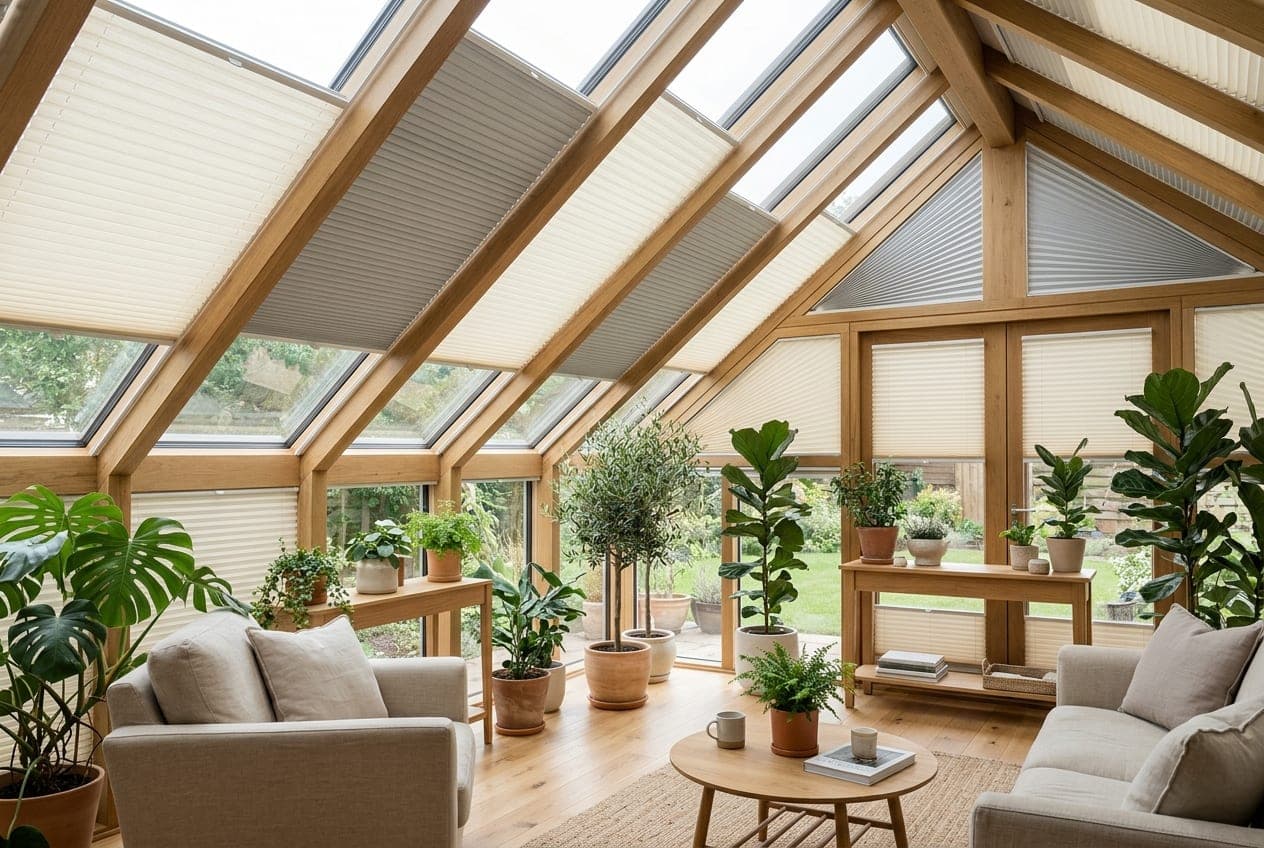
| Pleated blinds | Compact folded fabric | Roof windows, conservatories |
| Picasso shades | Fabric vanes between two sheers | Where a curtain look meets control |
| Outdoor zip screens | Taut fabric in zipped side channels | Terraces, pergolas, outdoor dining |
Specific products are described on our products page. A useful approach is to pick one textile family and one hard family for the whole scheme, for example sheer drapery with wooden blinds. Then vary fabric and colour room by room.
How do fabric samples and client approval rounds work?
Fabric samples are physical cuttings of the fabrics proposed for your scheme, sent to your studio before production. They let you and your client check colour, texture and transparency in the room's real light, and they are the reference for the final fabric approval. Production starts only after that approval.
In practice, a design project often goes through more than one approval round. The following sequence works well for most studios:
- First selection: you share the mood, the palette and the light level wanted per room; we propose fabrics that suit it.
- Presentation: the samples go onto your mood board or sample board for the client presentation.
- Feedback round: the client narrows the choice; we send further samples if a colour or weight needs adjusting.
- Final approval: one fabric per curtain or blind type is confirmed in writing, with its fullness and lining choice.
- Reference copy: keep an approved sample in the project file, so the delivered goods can be checked against it.
Hold the samples against the window at different times of day. A sheer that looks warm in the morning can read cooler in the evening. A blackout fabric should be checked from the room side and from the street side, because both faces may be visible in the finished building.
What is curtain fullness, and how should a designer specify it?
Curtain fullness is the amount of extra fabric used in a curtain compared with its finished width. It is written as a percentage: 80% fullness means the fabric width is 1.8 times the finished width. LuxiVeil makes fullness exactly to the figure in your specification.
Fullness controls how deep and how regular the folds look, and it has a direct effect on fabric quantity. The comparison below is a starting point for a design discussion, not a fixed rule:
| Fullness in the spec | Fabric used per metre of finished width | How the folds read |
|---|---|---|
| 50% | 1.5 metres | Lighter, flatter, more tailored |
| 80% | 1.8 metres | Even, balanced folds |
| 100% | 2.0 metres | Deep, generous folds |
Heavier fabrics often look right at a lower figure. Fine sheers usually need more fabric to avoid a thin appearance. Our advice is to state fullness per curtain type in your schedule, for example "sheer 100%, blackout 80%". Confirm it together with the approved fabric, because the two decisions belong together.
Custom Patterns and Motorized Curtains
These sections explain laser-cut patterns from your artwork and planning motorized operation.
How can a design motif become a laser-cut pattern?
Laser cutting is a process in which a pattern drawn digitally from the designer's artwork is cut into the fabric or slats of a blind. LuxiVeil applies laser-cut patterns to roller blinds, vertical blinds and wooden blinds. Options include decorative borders, full-surface patterns, logos and motifs designed for a specific hotel or residence.
For a designer, this means a motif from the scheme can be carried onto the window itself. A pattern from a carpet, a screen, a tile or a brand identity can be redrawn and cut. The window then becomes part of the concept, not a neutral surface behind it.
To get a pattern started, send us:
- Artwork: a vector file, a scan or even a clear sketch of the motif.
- Placement intent: border only, a central motif or a repeat across the whole surface.
- Product choice: roller, vertical or wooden blind, or ask us which suits the motif best.
- Window sizes: so that the pattern scale can be planned against the real dimensions.
The pattern is drawn digitally before cutting, so scale and position can be discussed and approved first. Our laser-cut blinds page shows the process in more detail.
How should motorized curtains and blinds be planned in a design scheme?
Every product category LuxiVeil makes can be supplied motorized, and curtain tracks are available manual or motorized, single or double. For a designer, the key point is timing. Motorization has to be decided early, because power positions and fixing details are built into walls and ceilings long before the curtains arrive.
Many schemes mix both types. Motorized tracks suit tall or wide glazing, double-height spaces and windows behind furniture. Manual operation remains a good choice for smaller windows, secondary rooms and budget-sensitive areas. The same product family can run through a building with operation chosen room by room.
The motor and control set-up, including any link to a home automation or building management system, is agreed per project. It is based on your electrical and control specification. Bring your electrical engineer or contractor into the discussion at drawing stage and mark each motorized window clearly in the schedule.
Planning a Curtain Specification From Drawings to Site
The next sections cover the specification, site measurements, trade coordination and fire safety.
What should a curtain and blind specification include?
A curtain and blind specification is the document that tells the manufacturer exactly what to make for each window. For LuxiVeil, the most useful format is a window schedule. It lists every opening with its room, size, product, fabric, fullness, track type and operation, plus a reference to the relevant drawing.
A complete line in your schedule usually covers:
- Location: room name or number and window reference that matches your drawings.
- Size: width and drop, marked as drawing size or measured size.
- Product: for example "sheer + blackout drapery" or "wooden blind with tape ladders".
- Fabric: the approved sample reference, or "to be selected" if still open.
- Fullness: the percentage per curtain type.
- Track or headrail: single or double, ceiling- or wall-fixed.
- Operation: manual or motorized, and the side or stack direction where it matters.
- Special details: laser-cut pattern, tape colour, mixed vane colours, sloped vertical blinds.
If your studio already uses an FF&E schedule format, send it as it is. We work from your document and ask about anything that is unclear, rather than asking you to copy it into ours.
From drawings to final measurements: what changes on site?
LuxiVeil can quote from architectural drawings, but production follows the final measurements taken on the finished site. Drawing sizes give an accurate budget early on. Measured sizes, taken after walls, ceilings and frames are complete, make sure each made-to-measure item fits the real opening.
Differences between drawings and site are normal in any fit-out. Plaster, ceiling build-ups and frame positions can all move a few details away from the plan. For that reason, we recommend two stages:
- Quotation stage: prices are based on your drawings and window schedule.
- Production stage: each size is confirmed from site measurements before cutting starts.
The ~200-room hotel package figure below is counted from this second point. Lead time starts after sample approval and final measurements, not from the first enquiry.
How do we coordinate with contractors and the client during the fit-out?
Window coverings are installed at the end of a fit-out, but they depend on earlier work by other trades. LuxiVeil works with the designer as the main point of contact. The designer can bring in the main contractor, electrician or installer when a question concerns their scope.
The points that most often need coordination are:
- Fixing surfaces: the ceiling or wall where tracks and blinds are mounted must be planned to carry them securely.
- Ceiling details: if tracks sit in a recess or behind a pelmet, the space must suit the product and its stack.
- Power positions: agree locations for motorized items with the electrical contractor before walls are closed.
- Access and sequence: share the installation programme so that delivery follows the finished floors or rooms.
- Client changes: if the client changes a fabric or a room use, tell us before production so the order can be updated.
One named contact on your side helps. Questions during production can then be answered quickly without reopening approved decisions.
How are fire-safety requirements handled in a design specification?
Fire-safety requirements for textiles are checked per fabric and per project at LuxiVeil. When a hotel, hospital or public building needs fire-rated textiles, tell us at specification stage. The fabric proposal can then be limited to options with documentation for that exact fabric.
This affects design choices, because it can narrow the range of colours and textures available for a room. It is better to know the requirement before samples are presented to the client than after a favourite fabric has been chosen. Documentation always applies only to the specific fabric it was issued for.
The documents we can share at present are listed on our Quality Documents page. They belong to our supply partners and do not represent certifications held by LuxiVeil.
How to Order Curtains for a Design Project
Below you will find minimum order, lead time and what to send for a quotation.
Minimum order, lead time and phased delivery for design projects
LuxiVeil does not set a fixed minimum order for design projects. A single villa, a showroom and a full hotel are each quoted from the designer's own drawings, schedule and product choices.
Lead times are confirmed per project, because every item is made to measure. The one reference figure we give is for a hotel of around 200 rooms. A full room package of blackout and sheer curtains with double tracks can be produced and delivered in about 8 weeks after sample approval and final measurements.
For larger schemes, delivery can be split into phases that follow the installation programme, for example floor by floor or villa by villa. Quotations can include delivery to the site or to a warehouse, with freight shown separately on request.
What should a designer send to get a quotation?
To quote a design project, LuxiVeil needs a window schedule or drawings and an indication of the product, fabric and operation intended for each room. Missing details do not have to block the request. Open items can be quoted as options and refined once the client has decided.
A helpful first package includes:
- Drawings or window schedule: plans, elevations or a list of openings with sizes.
- Product intent per room: for example drapery with sheers in bedrooms, wooden blinds in the study.
- Fabric direction: colours, transparency and any fire-safety requirement, or samples you already have.
- Fullness and tracks: fullness per curtain type, single or double track, ceiling or wall fixing.
- Operation: which windows are manual and which are motorized.
- Design details: laser-cut artwork, tape ladders, mixed vane colours or sloped vertical blinds.
- Programme: the site address and the planned installation dates.
Send it through our RFQ form or by WhatsApp. If you prefer, start with two or three typical rooms. Once those details are agreed, the rest of the schedule can follow.
Specifying by space: residential, hospitality and commercial interiors
Different interiors call for different combinations. The suggestions below are starting points for a design conversation; your concept and the client's brief always decide.
Residential villas and apartments
- Living rooms: sheer drapery for softness, with zebra or roller blinds behind for daytime glare.
- Bedrooms: sheer and blackout drapery on double tracks, motorized where windows are large.
- Studies and libraries: wooden venetian blinds, with decorative tape ladders for a softer textile line.
- Kitchens and bathrooms: aluminium venetian blinds or roller blinds with a suitable fabric.
Hotels and hospitality
- Guest rooms and suites: blackout and sheer drapery on double tracks, specified consistently across room types.
- Lobbies and restaurants: laser-cut roller, vertical or wooden blinds carrying the hotel's motif.
- Terraces and pool bars: outdoor zip screens that stay taut in wind and shade the seating.
Our hotel curtains page covers guest-room packages in more depth.
Offices and showrooms
- Meeting rooms: roller or zebra blinds for screen glare, motorized where a room is used for presentations.
- Showrooms: laser-cut blinds with a brand logo or pattern as a visible design element.
- Tall glazing: vertical blinds or vertical sheer shades for floor-to-ceiling windows.
References, Handover and Specification Terms
This final part covers our project references, client handover and key specification terms.
Design studios and project references
LuxiVeil works with interior designers, architects and FF&E consultants alongside hotels, villa owners and dealers. Project references we have permission to name include Sirene Belek Hotel, Titanic Hotels and COP31 Antalya 2026.
For a design studio, the useful question is how we handle your next scheme. Every project starts the same way: drawings, a product selection, fabric samples and an agreed specification. The quotation is prepared for your project alone. If your studio regularly sources finished curtains for clients, our wholesale curtains page explains how repeat partners order.
Handover: care information and documentation for the client
At handover, the client or facility team needs to know how to look after what was installed. LuxiVeil supplies care information per fabric on request. Ask for it when the fabric is approved, so it can go straight into your handover pack.
For motorized products, add the control details agreed for the project to the building documentation. Keep the approved fabric references with the as-built schedule, so a replacement or an extra window can be matched later. If a question arises after delivery, contact the same team that produced the order.
Specification terms for designers
- Window schedule: a list of every opening with its location, size and specified window covering.
- Fullness: the extra fabric in a curtain relative to its finished width; 100% fullness means twice the width.
- Double track: two parallel curtain tracks, usually carrying a sheer and a blackout curtain.
- Stack: the space a curtain or blind occupies when fully open, at the side or top of the window.
- Tape ladder: a decorative textile tape that holds the slats of a wooden blind instead of a thin cord.
- Laser-cut pattern: a design drawn digitally and cut into a blind's fabric or slats.
- Sample approval: written confirmation of a fabric from a physical sample before production starts.
- Made to measure: produced to the confirmed size of each individual window, not from a standard size list.
Working on a scheme now? Send your window schedule or drawings through the [RFQ form](/contact) or WhatsApp, and our export team will reply with samples, options and a project-specific quotation.
How to order Curtains & Drapery for Interior Designers from LuxiVeil
Working with LuxiVeil follows a clear, step-by-step process, from the first enquiry to delivery at your project.
- Send your enquiry. Use the quote request form or WhatsApp and tell us about your project, quantities and the countries involved.
- Share the project details. Provide window or room measurements, the required function (blackout, light filtering, motorized control) and any design preferences.
- Choose product and fabric. Our team recommends suitable systems and fabrics for your use case, and you can request samples to confirm colour and feel.
- Approve the quotation. You receive a written quotation covering the agreed specification and project scope.
- Production and delivery. We manufacture in Antalya, Türkiye, and arrange packing and shipment to your project location.
Further reading: Window blind (Wikipedia) · WhatsApp
Need Custom Specifications or Fabric Samples?
Directly discuss technical requirements, lead times, and shipping terms on WhatsApp.
Request Samples on WhatsAppFrom our installations
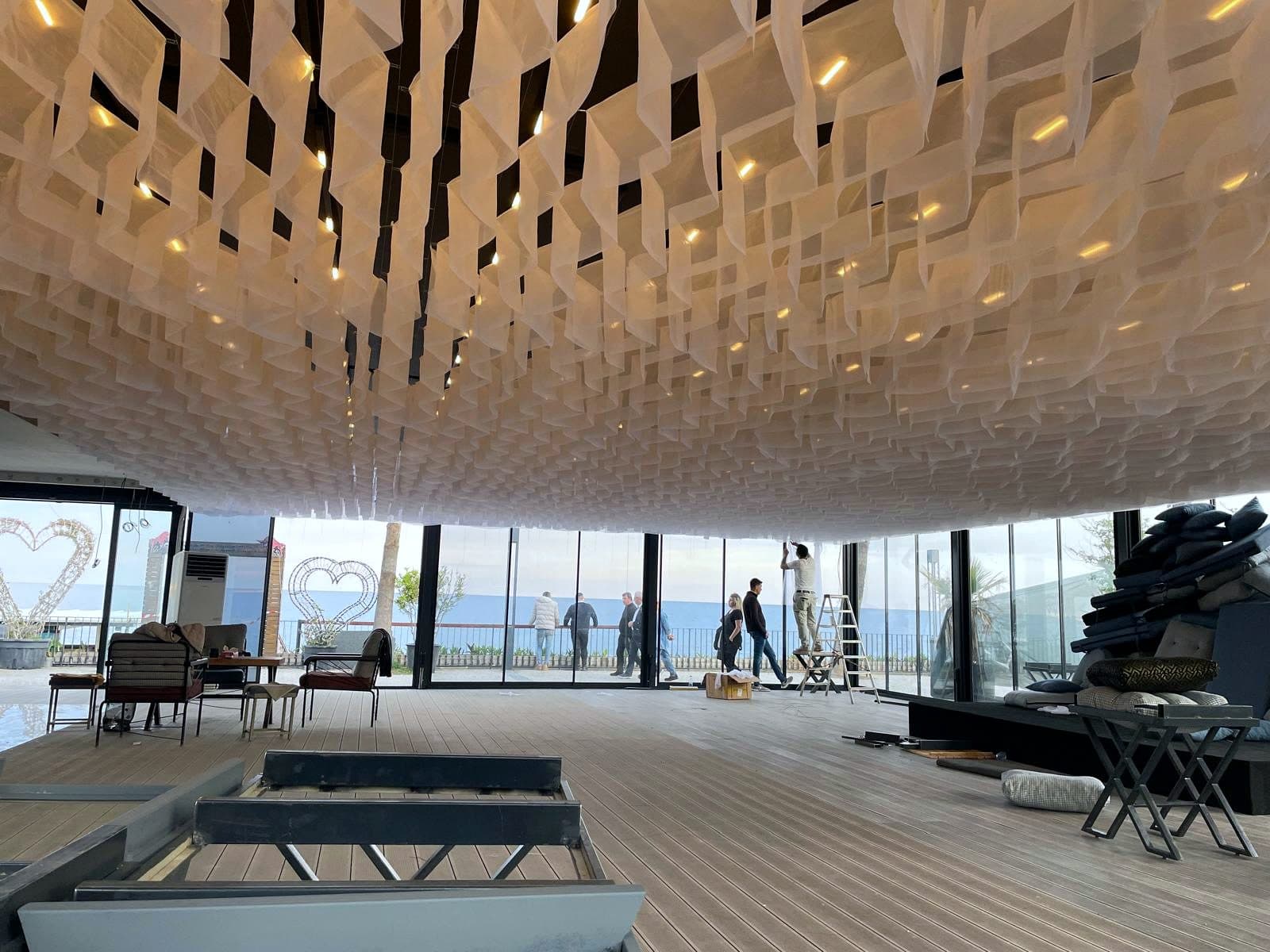
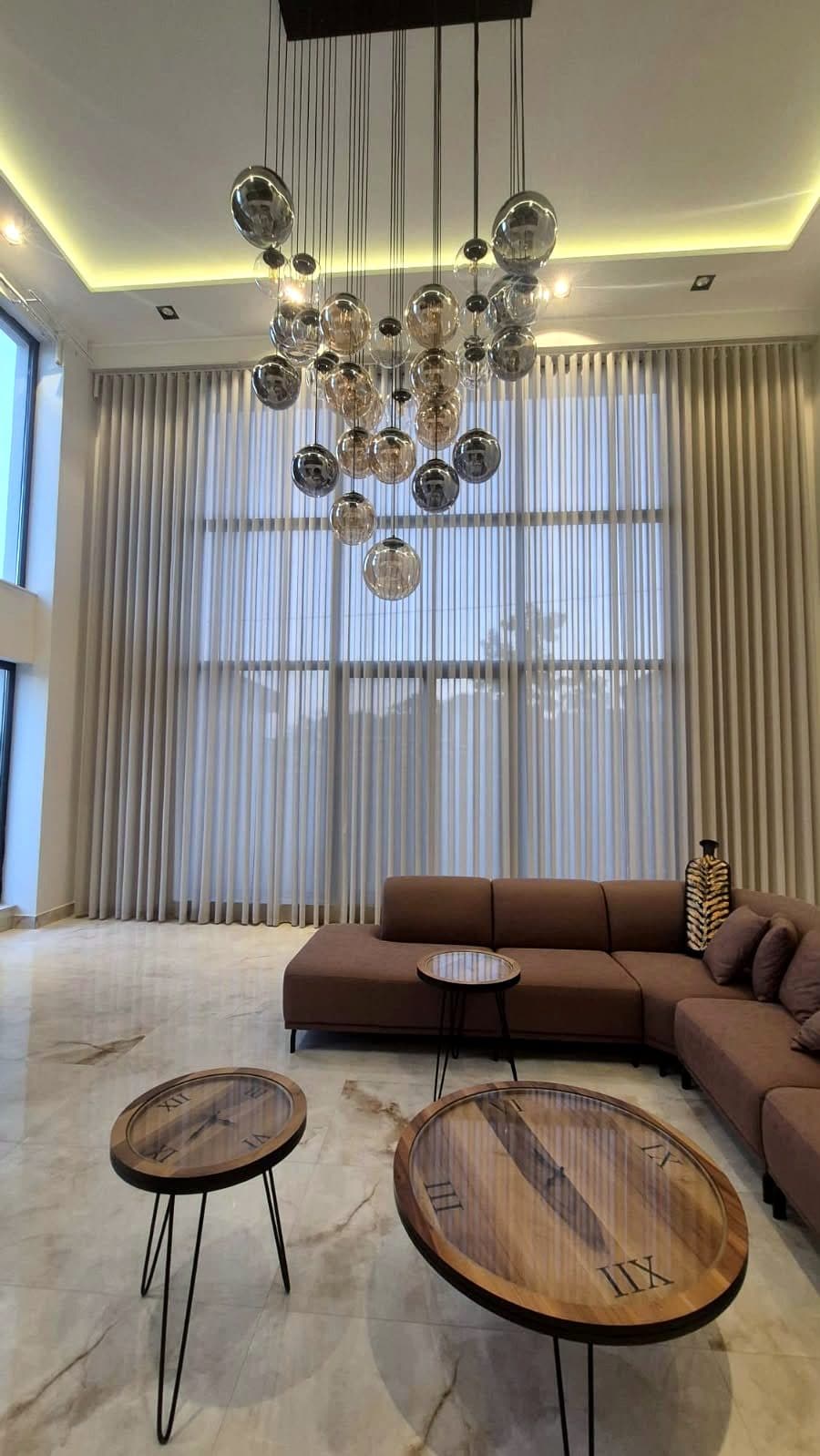
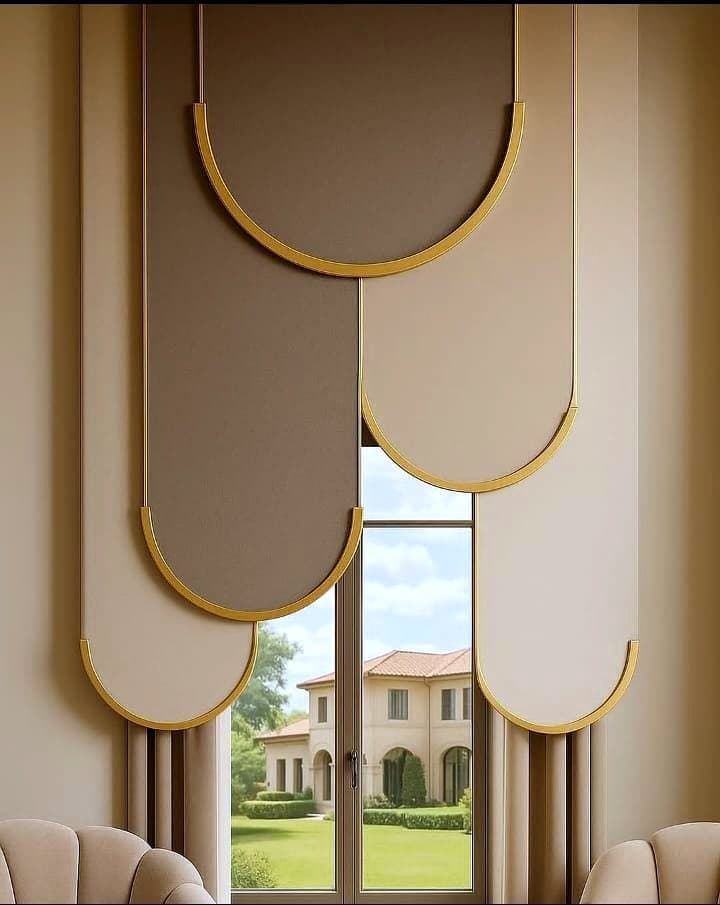
Real photographs of blinds and curtains we produced in our Antalya workshop and installed for homes, cafés, restaurants, offices and venues. Photos are only lightly colour-corrected.
Related Products
Related Services & Materials
Why buyers work with us
Since 1994
Family manufacturer in Antalya, Türkiye
Own workshop
Every blind cut and assembled in-house
Samples first
Physical fabric samples before production
Secure payment
Letter of Credit (L/C) accepted for export orders
Selected references: Titanic Hotels · Sirene Belek Hotel · COP31 Türkiye Antalya · Kadriye Luxury Garden Villaları · Anadolu Hastaneleri
Frequently Asked Questions
Do you send fabric samples to designers?
▼
Yes. Physical fabric samples are sent before production, so you and your client can judge colour, texture and transparency in the room's own light and sign off the fabric.
How should we specify curtain fullness?
▼
State fullness as a percentage per curtain type in your schedule. We make it to that figure: 80% fullness means the fabric width is 1.8 times the finished curtain width.
Can you turn our own motif into a pattern?
▼
Yes. Your artwork is drawn digitally and laser-cut into roller blinds, vertical blinds or wooden blinds, so a motif from your scheme can appear on the window itself.
Do you take on single-villa or small residential schemes?
▼
Yes. There is no fixed minimum order. A one-villa scheme and a full hotel are both quoted from your own drawings and specification.
Which products can we specify from LuxiVeil?
▼
Pleated drapery (sheer and blackout) with single or double tracks, zebra, roller and blackout blinds, wooden and aluminium venetian blinds, vertical and pleated blinds, Picasso shades, vertical sheer shades and outdoor zip screens.
Can drapery in a design scheme be motorized?
▼
Yes. Curtain tracks come manual or motorized, single or double, and every product category can be motorized. The control set-up is agreed per project with your electrical specification.
What should we send for a design-project quotation?
▼
A window schedule or drawings, the product and fabric intended per room, fullness, track type, operation and any pattern artwork. Open items can be quoted as options and refined later.
Ready to discuss your project for Curtains & Drapery for Interior Designers?
Contact our export team directly for fabric samples and a project-specific quote.