Zip Screens and Zip Blinds Manufacturer for Pergola, Awning and Terrace Projects
LuxiVeil manufactures made-to-measure outdoor zip screens in Antalya, Türkiye, for pergola, awning and glass-balcony companies, restaurants, hotels and contractors. The fabric edges run in zipped side channels, so the screen stays taut in wind and gives sun, insect and privacy protection. Manual or motorised, made per opening, sampled before production and delivered in phases.
Last updated:
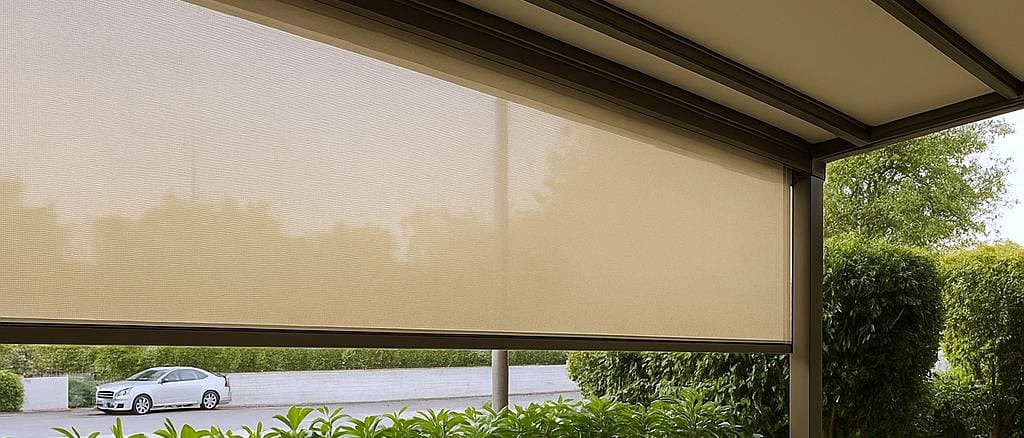
Zip Screens Made to Measure for Outdoor Projects
LuxiVeil manufactures outdoor zip screen systems to measure in Antalya, Türkiye, for pergola, awning and glass-balcony companies, restaurants, hotels and contractors. The fabric edges are locked in zipped side channels, so the screen stays taut in wind and protects against sun and insects. Screens are supplied manual or motorised, made per opening and sampled before production.
We are the export brand of Gökcan Home, a curtain and blind manufacturer that has been producing in Antalya since 1994. In Türkiye our products are sold under the ForsPer brand. Antalya is a city that lives outdoors for a large part of the year, and terraces, pergolas and outdoor restaurant areas are part of everyday work for us. Zip screens are a natural extension of our blind range for these spaces.
This page explains how a zip screen works, where it is used, how pergola and awning companies can add zip screens to their offer, what we need from you to prepare a quote, and how samples, production and delivery are handled.
How a Zip Screen System Works
A zip screen is an outdoor roller screen with one important difference from a standard roller blind: the side edges of the fabric are not free. A zip strip runs along both edges of the fabric, and these edges are guided in side channels from top to bottom. When the screen is lowered, the edges stay inside the channels along the full height of the opening.
Fabric locked in the side channels
Because the fabric edges are held in the channels, the screen does not leave open gaps at the sides the way a free-hanging roller blind does. The fabric forms a closed surface between the two channels. This is what makes zip screens suitable for openings where a normal outdoor blind would flap, lift or leave space for light and insects to pass.
At the top, the fabric rolls onto a tube in a cassette. At the bottom, a bottom bar holds the fabric down and finishes the screen neatly. The cassette, side channels and bottom bar together form the frame of the system, and they are cut to the size of each opening in our workshop.
Staying taut in the wind
The zipped edges keep the fabric under tension across its width. In wind, the screen does not billow freely like a loose blind; the edges stay in the channels and the fabric stays taut. For terraces and pergolas this matters in daily use, because guests and residents can keep the screens down in breezy weather instead of raising them every time the wind picks up.
How a screen behaves on a specific site depends on the size of the opening, the way it is mounted and how exposed the location is. For that reason we do not publish general wind classes on this page. We look at each opening in your enquiry and confirm the details in the quotation.
Sun, insect and privacy protection
A lowered zip screen does several jobs at once. It shades the space behind it from direct sun and reduces glare on terraces and in outdoor dining areas. Because the edges are closed, it also helps keep insects out of a covered pergola or terrace in the evening. And depending on the fabric chosen, it gives privacy from neighbours, the street or other parts of a hotel garden while still letting daylight through.
The fabric choice decides the balance between view, shade and privacy. Some projects want to keep the view to the sea or the garden and need a screen fabric that people can look through from the shaded side. Others need more privacy, for example between villa terraces or along a street-facing restaurant. We discuss this with you when you send your fabric and colour preference, and we send samples so the choice can be checked on site.
Where Zip Screens Are Used
Zip screens are made for outdoor and semi-outdoor spaces where a curtain or an indoor blind would not be practical. These are the settings our customers most often ask about.
Pergolas and covered terraces
Pergolas are the most common application. A pergola with a fixed or opening roof covers the space from above, and zip screens close the sides. With screens on two, three or all four sides, a pergola becomes a usable outdoor room that can be shaded in the afternoon, closed against insects in the evening and opened completely when the weather is mild. For pergola companies, this turns a single product into a more complete outdoor-living package.
Restaurant and café terraces
Restaurants and cafés use zip screens to keep terrace tables usable through more of the day and more of the season. Screens can shade the low afternoon sun, shelter tables from wind and separate the terrace from the street. Because each screen is made for its own opening, a terrace with several bays of different widths can be fitted with screens that match each bay.
Hotel outdoor areas
Hotels use zip screens on restaurant terraces, pool bars, beach-club areas, lounge pergolas and outdoor meeting or event spaces. In resort hotels the same terrace may serve breakfast in the morning sun and dinner in the evening, and motorised zip screens let staff adjust the space quickly. For hotels that already source curtains from us, zip screens can be added to the same project; see our hotel curtains page for the indoor side of a hotel package.
Villas and private terraces
On villas and residential terraces, zip screens give shade and privacy around outdoor kitchens, seating areas and pool terraces. Many villa owners combine motorised zip screens outside with indoor blinds or curtains in the same order, so the whole house is supplied by one manufacturer.
Glass balconies and winter gardens
Glass-balcony and winter-garden companies use zip screens on the outside of the glazing to reduce heat and glare before the sun reaches the glass, or to shade open balcony sections. Inside the glazing, pleated blinds are often the better choice for folding glass systems and sloped roofs; both can be supplied together.
Zip Screen Specifications: Motorised Operation and Custom Sizes
These sections explain how zip screens are operated with a motor and how each screen is made to measure for its own opening.
Motorised Operation for Zip Screens
We supply zip screens with manual or motorised operation. Every product category we make can be supplied with a motor, and for zip screens this is the usual choice: screens are often wide or high, mounted on the outer edge of a pergola, or installed in groups where operating each one by hand would be slow and impractical.
A motorised zip screen is raised and lowered with a remote control or a wall switch, and screens in the same space can be grouped so that a whole terrace is opened or closed together. This is useful for restaurants and hotels, where staff need to adjust several screens at the start and end of service. For pergola companies, a motorised screen also fits well with motorised roof systems that many of their customers already expect.
Control options are confirmed per project. If your project needs integration with a specific control system or with the controls of a pergola, tell us in your enquiry and we will confirm what is possible before you place the order. For the wider motorised range across curtains and blinds, see our motorised blinds page.
Made to Measure for Every Opening
Every zip screen is produced to the size of its opening. In our workshop, the fabric and the aluminium profiles are cut to order, the fabric and profiles are assembled, the operating mechanism is fitted, and each screen is inspected, packed and delivered. Nothing is taken from a stock of standard sizes.
This matters on outdoor projects because openings are rarely identical. A restaurant terrace may have bays of different widths between posts, a pergola may have a longer front than side, and a villa terrace may have openings interrupted by columns or walls. By measuring and producing each opening separately, every screen fits its own place.
To make this work, we need accurate sizes and a clear description of how each screen will be mounted. On larger projects it helps to send a simple drawing or a list with a code for each opening, so that production, packing labels and installation all use the same references. Each screen can then be packed and labelled per opening, which makes installation on site faster.
We do not publish maximum sizes for zip screens. Whether a very wide or very high opening can be closed with a single screen, or is better divided into two, depends on the opening and the mounting. We check this per opening in your enquiry and confirm it in the quotation.
Adding Zip Screens to Your Pergola or Awning Offer
Many of our zip screen customers are not end users but companies that build pergolas, awnings, glass balconies and outdoor living spaces. For them, zip screens are a way to offer a more complete solution without developing a product of their own.
Supply for your own projects
If you build pergolas or install awnings, you already measure and plan the openings for your customers. You can send us those opening sizes and mounting details, and we produce zip screens made to measure for each project. You keep the relationship with your customer and handle the installation; we handle the cutting, assembly and fitting of the mechanism.
This lets a pergola company quote shade, insect protection and privacy together with the structure, instead of sending the customer elsewhere for screens. It also avoids holding a stock of standard-size screens that rarely match real openings.
Dealers and resellers
Blind dealers, curtain shops and outdoor-living retailers can add zip screens to their range. There is no fixed MOQ, so you can start with a single customer project and order more as demand grows. Dealers can combine zip screens with other product types in one order, for example zip screens for a terrace together with zebra blinds or roller blinds for the interior of the same building. For the full dealer model, see our wholesale blinds page.
Combining zip screens with other products
Outdoor projects rarely stop at the terrace. A hotel restaurant with a zip-screened terrace also has interior windows; a villa with a pergola also has bedrooms and living rooms. Because we manufacture the whole range, you can order outdoor zip screens, indoor blinds and curtains in one project and receive them from one supplier, with one set of samples, one quotation and coordinated delivery.
For a step-by-step guide to measuring openings and choosing a supplier, see our article Adding Zip Screens to Your Pergola and Awning Offer.
Zip Screen, Zip Blind or Zipper Screen: One Product, Several Names
Buyers search for the same product under different names. Zip screen, zip blind, zip roller blind, zipper screen and ZIP screen all describe an outdoor roller screen whose fabric edges run in zipped side channels. In Germany it is often called a Zip-Rollo or a Senkrechtmarkise with zip guides, in the Netherlands and Belgium a zipscreen or windvast screen. We make this one system to measure, whatever name your customers use.
How Windproof Is a Zip Screen?
A zip screen resists wind because its zipped fabric edges stay locked in the side channels instead of flapping loose. How much wind a screen can take depends on its width and height, the fabric, the mounting and how exposed the site is. In Europe, the wind resistance of external blinds is classified under EN 13561; our article on zip screen wind classes under EN 13561 explains what the classes mean. We do not publish one wind class for every size: send the openings and the site exposure, and we confirm what can be produced for each opening in the quotation.
Ordering Zip Screens to Measure, Including Bulk Orders
We do not sell through a web shop. Zip screens are quoted and produced per opening for trade customers: pergola, awning and glass-balcony companies, dealers and contractors. You can send the openings of several projects at once and receive one quotation, one set of samples and one delivery plan.
- Measure each opening with our guide on how to measure an opening for a zip screen.
- Send the list with the mounting type, fabric, colour and operation for each opening.
- Approve the fabric and profile colour samples.
- We produce each screen to its size and label it per project or opening.
Our guide for pergola and awning companies adding zip screens covers the business side of adding zip screens to your offer.
How We Produce and Quote Zip Screens
The following sections describe how zip screens are made in our workshop, what to send for a quote and how samples are approved before production.
How Zip Screens Are Made in Our Workshop
LuxiVeil is a manufacturer, not a trading company. Zip screens are produced in our own workshop in Antalya, where the team that quotes your project works alongside the team that makes it.
- Cutting: fabric and aluminium profiles are cut to order for each opening.
- Assembly: the fabric and the profiles are assembled into a complete screen with cassette, side channels and bottom bar.
- Mechanism: the chosen manual or motorised mechanism is fitted to each screen.
- Inspection and packing: each screen is inspected, packed and labelled for its opening, then delivered.
Because production happens under one roof, the opening sizes and references in your list go directly into production, and questions are answered by people who know how the product is made. You can read more about our history on the About page.
What to Send for a Zip Screen Quote
A complete enquiry lets us prepare an accurate quotation without long back-and-forth. Please send as much of the following as you have:
- Opening sizes: width and height of each opening, ideally with a code or position for each one.
- Mounting situation: whether each screen is mounted on a pergola, under a ceiling or beam, between posts or walls, or on a facade.
- Fabric and colour preference: how much view, shade and privacy you need, and the colour of the fabric and of the profiles you would like to match.
- Operation: manual or motorised; for motorised screens, remote or wall control, and whether screens should be grouped or linked to other controls.
- Quantities: the number of screens per size and per project.
- Photos or drawings: pictures of the openings and any drawings of the pergola, terrace or facade.
- Delivery and timing: the delivery address, whether delivery should go to site or to your warehouse, and your installation programme.
You can send this through the quote request form on our contact page or by WhatsApp from the buttons on this page. Spreadsheets, PDFs, sketches and photos are all fine. We do not publish prices; each project is quoted on its own sizes and quantities. Quotes can include delivery to site or to your warehouse, with freight shown as a separate line.
Samples and Approval Before Production
Before production starts, we send fabric and colour samples for approval. For outdoor screens this step is especially useful, because a fabric looks different in full sun on a terrace than it does in an office. Holding the sample against the pergola, the facade or the view lets you or your client check the colour, the transparency and the overall look before any screen is cut.
For pergola and awning companies, samples also help in your own sales: you can show the fabric options to your customer and confirm the choice before you order. Once the fabric and colour are approved and the final opening sizes are confirmed, production begins.
Planning Zip Screen Projects
Here we explain how deliveries can be phased around your installation programme and which points we clarify before preparing a quotation.
Phased Delivery and Project Timing
Outdoor projects often run in stages. A hotel may renovate one terrace before the season and another after it; a pergola company may install several customer projects one after the other; a contractor may need screens for one building before the next. Deliveries can be split in phases to follow your installation programme.
Lead times for zip screens are confirmed per project, based on the number of screens, the fabric and the delivery address. When you send your installation programme with the enquiry, we plan production and delivery around it and state the timing in the quotation.
Points We Clarify Before Quoting
Most questions on zip screen projects come from a few recurring details. Checking them early saves time later.
- Mounting surfaces: the side channels and cassette need a solid surface to fix to. On pergolas this is usually the posts and beams; on terraces it may be walls or a ceiling. Tell us what each screen will be fixed to.
- Obstacles in the opening: handrails, low walls, lights, heaters and furniture can affect where the screen can run. Photos help us see these.
- Power supply: motorised screens need power at the cassette position. Pergola companies usually plan this with their electrical work; for existing terraces, it should be checked before ordering.
- Fabric for the purpose: a screen chosen mainly for privacy needs a different fabric from one chosen to keep the view. Tell us which matters most.
- Matching colours: profile and fabric colours are often chosen to match the pergola or window frames. Send the frame colour so we can suggest options.
- Fire documentation: if your project has fire-safety requirements, state them in the enquiry. Documentation is checked per fabric and per project; see our Quality Documents page.
Working with LuxiVeil on Your Zip Screen Project
These last sections introduce Gökcan Home and the LuxiVeil brand and explain how to request your zip screen quote.
Who We Are: Gökcan Home and the LuxiVeil Brand
LuxiVeil is the export brand of Gökcan Home Tekstil Turizm Ticaret ve Sanayi Ltd. Şti., a curtain and blind manufacturer based in Antalya, Türkiye, producing since 1994. In Türkiye our products are sold under the ForsPer brand.
Our range covers the main shading products for hotels, villas, offices and outdoor spaces: zebra blinds, roller blinds, wooden and aluminium venetian blinds, vertical blinds, pleated blinds, Picasso shades and outdoor zip screens, as well as curtains on manual or motorised tracks. Everything is made to measure, and every product category can be supplied motorised. We have produced for hotel projects including Sirene Belek Hotel and Titanic Hotels, and for COP31 Antalya 2026. The full range is in our product catalogue, and the zip screen product page is at zip screen blinds.
Request Your Zip Screen Quote
To receive a quotation, send us the opening sizes, the mounting situation for each screen, your fabric and colour preference, the operation you want, the quantities and the delivery address. Our team will review the details, ask about anything that is missing and return a quotation per screen, with freight shown separately, followed by fabric samples for approval.
If you are a pergola, awning or glass-balcony company looking for a regular zip screen supplier, tell us about the projects you typically build, and we will explain how ordering per project works. Use the quote request form on the contact page or the WhatsApp buttons on this page to start.
How to order Zip Screens and Zip Blinds Manufacturer for Pergola, Awning and Terrace Projects from LuxiVeil
Working with LuxiVeil follows a clear, step-by-step process, from the first enquiry to delivery at your project.
- Send your enquiry. Use the quote request form or WhatsApp and tell us about your project, quantities and the countries involved.
- Share the project details. Provide window or room measurements, the required function (blackout, light filtering, motorized control) and any design preferences.
- Choose product and fabric. Our team recommends suitable systems and fabrics for your use case, and you can request samples to confirm colour and feel.
- Approve the quotation. You receive a written quotation covering the agreed specification and project scope.
- Production and delivery. We manufacture in Antalya, Türkiye, and arrange packing and shipment to your project location.
Further reading: Window blind (Wikipedia) · WhatsApp
Need Custom Specifications or Fabric Samples?
Directly discuss technical requirements, lead times, and shipping terms on WhatsApp.
Request Samples on WhatsAppRelated Products
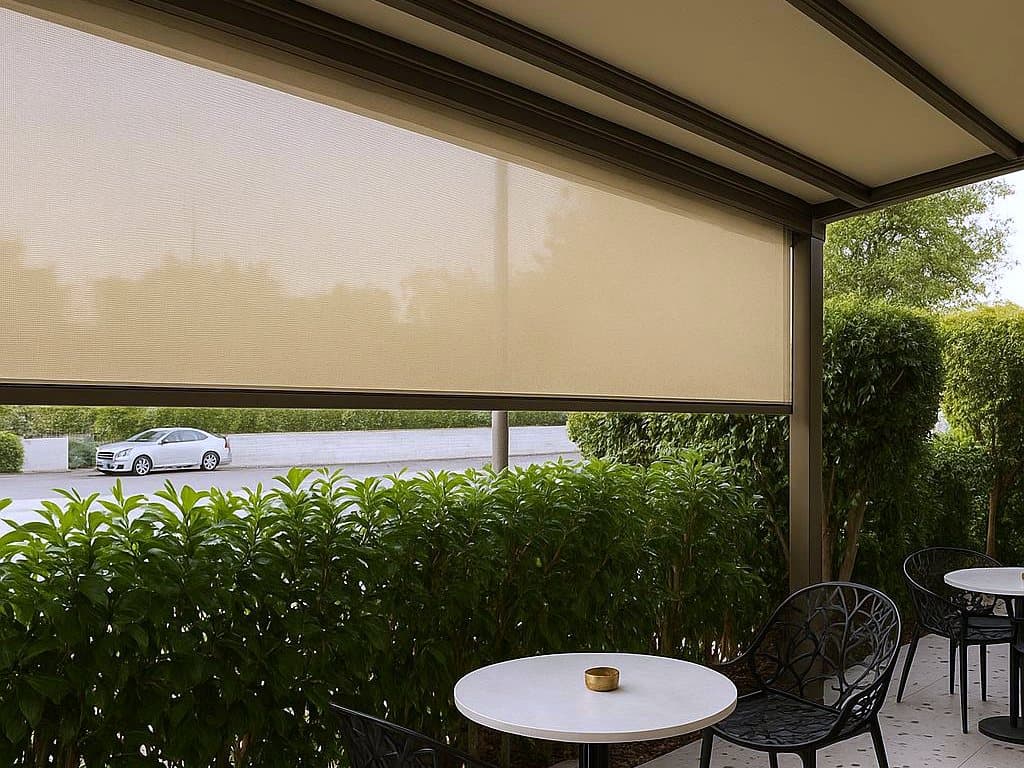
Related Services & Materials
Why buyers work with us
Since 1994
Family manufacturer in Antalya, Türkiye
Own workshop
Every blind cut and assembled in-house
Samples first
Physical fabric samples before production
Secure payment
Letter of Credit (L/C) accepted for export orders
Selected references: Titanic Hotels · Sirene Belek Hotel · COP31 Türkiye Antalya · Kadriye Luxury Garden Villaları · Anadolu Hastaneleri
Frequently Asked Questions
What is a zip screen?
▼
A zip screen is an outdoor roller screen whose fabric edges are held in zipped side channels. Because the edges are locked along their full height, the fabric stays taut in wind and closes the gaps at the sides, giving sun, insect and privacy protection on pergolas, terraces and outdoor seating areas.
Can pergola and awning companies buy zip screens from you for their own projects?
▼
Yes. We supply pergola, awning and glass-balcony companies with zip screens made to the opening sizes of their projects. You send the sizes and mounting details per opening, we quote per screen and produce to measure. Dealers can also combine zip screens with other blinds in one order.
Are your zip screens motorised?
▼
Yes. We supply zip screens with manual or motorised operation. Motorised is the usual choice because the screens are often large, high or mounted on a pergola, where manual operation can be impractical. Control options are confirmed per project.
Is there a minimum order quantity for zip screens?
▼
There is no fixed MOQ. We produce for single villas and terraces as well as for restaurant and hotel projects with many openings, and dealers can combine zip screens with other product types in one order.
What information do you need to quote zip screens?
▼
Send the width and height of each opening, the mounting situation (on a pergola, under a ceiling, between posts or on a facade), your fabric and colour preference, the operation and control you want, the number of screens and the delivery address. Photos or drawings of the openings help us check the details.
Do you send samples before producing zip screens?
▼
Yes. Fabric and colour samples are sent for approval before production starts, so you or your client can check the fabric and colour against the pergola, frame or facade.
Can zip screens be delivered in phases?
▼
Yes. Deliveries can be split in phases to follow your installation programme, for example per building, per terrace or per group of pergola projects. Lead times are confirmed per project.
Do you publish wind ratings or maximum sizes for your zip screens?
▼
We do not publish general wind classes or maximum sizes on this page. Suitability depends on the opening, the mounting and the exposure of the site, so we review each opening in your enquiry and confirm what can be produced for it in the quotation.
Are zip screens windproof?
▼
Zip screens resist wind because their fabric edges stay locked in zipped side channels. The wind a screen can take depends on its size, fabric, mounting and site exposure, so we confirm it per opening in the quotation rather than publish one rating for all sizes.
Can I order zip screens online?
▼
We do not run a web shop. Trade customers send the opening sizes through our contact form, by WhatsApp or by email and receive a quotation per screen. Orders for several pergola or terrace projects can be combined.
Is a zip blind the same as a zip screen?
▼
Yes. Zip blind, zip roller blind, zipper screen and zip screen are different names for the same outdoor roller screen with zipped side channels.
Ready to discuss your project for Zip Screens and Zip Blinds Manufacturer for Pergola, Awning and Terrace Projects?
Contact our export team directly for fabric samples and a project-specific quote.