Wooden & Aluminium Venetian Blinds — Manufacturer for Projects and Dealers
LuxiVeil manufactures made-to-measure venetian blinds in Antalya, Türkiye: 50 mm real wood and faux wood slats with cord or decorative tape ladders, and moisture-resistant aluminium blinds, manual or motorized, for projects and dealers.
Last updated:
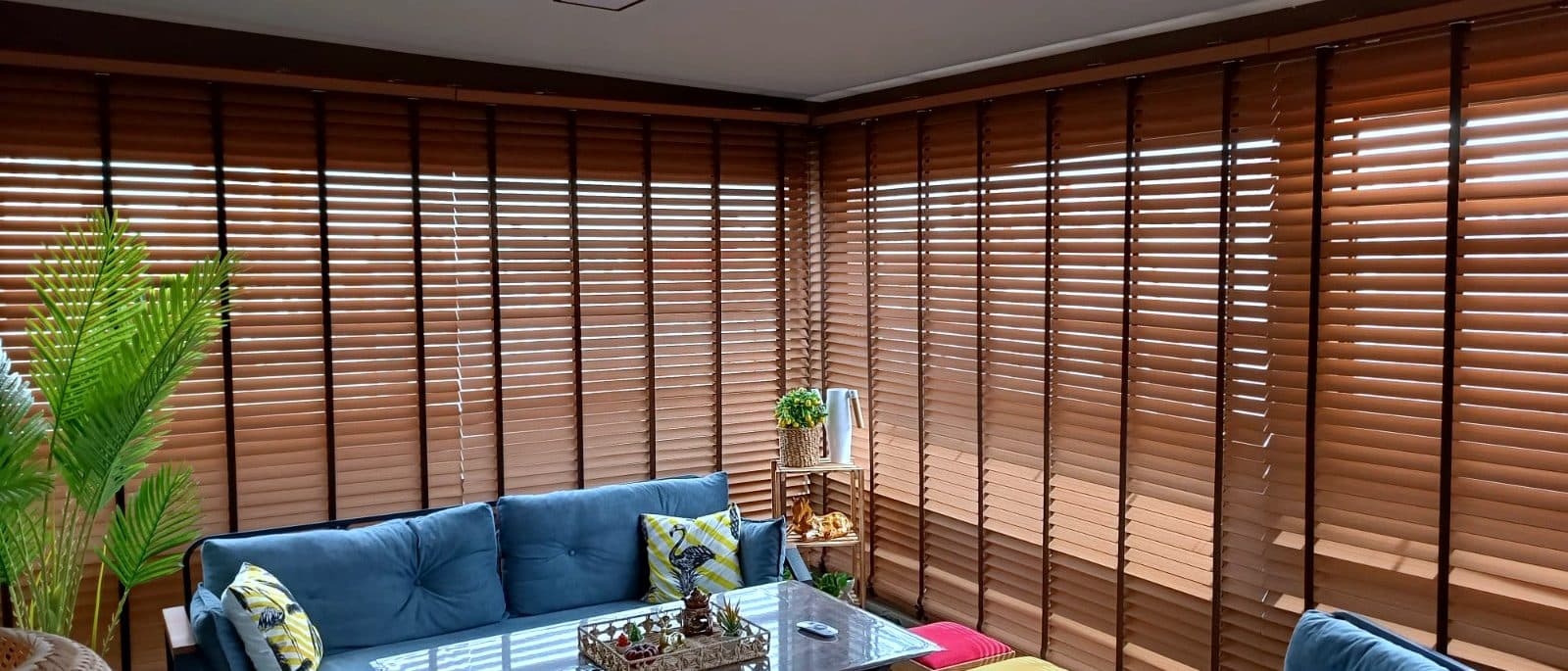
Venetian Blinds Made to Measure in Antalya, Türkiye
LuxiVeil manufactures wooden, faux wood and aluminium venetian blinds in Antalya, Türkiye, for hotels, villas, offices, interior designers and blind dealers. Wooden blinds are made with 50 mm slats and cord or decorative tape ladders; aluminium blinds suit kitchens, bathrooms and wet areas. Every blind is made to measure, manual or motorized, with samples sent for approval first.
We are the export brand of Gökcan Home Tekstil Turizm Tic. ve San. Ltd. Şti., which has produced curtains and blinds in Antalya since 1994. This page explains the differences between real wood, faux wood and aluminium, where each one fits best, which details can be specified, how to measure and what to send for a quotation.
What a Venetian Blind Is and Why Projects Use It
A venetian blind is made of horizontal slats held together by ladders. The slats can be tilted to direct or block daylight and raised to clear the window completely. This gives very precise light control: you can keep privacy at eye level while still letting light reach the ceiling, or close the slats fully for shade.
Venetian blinds are popular in projects because they combine this control with a clean, architectural look. They work in traditional and contemporary interiors, sit close to the glass and need no fabric fullness. In hotels and offices they are also valued because slats are easy to wipe clean and wear well with daily use.
The choice of slat material decides where a venetian blind performs best. Our range covers three materials: real wood, faux wood and aluminium.
Wooden vs Faux Wood vs Aluminium Venetian Blinds
Each material has a clear role. The table gives a quick overview; the sections below explain each option in more detail.
| Material | Look and feel | Best suited for | Points to consider |
|---|---|---|---|
| Real wood | Warm, natural grain | Villas, hotel rooms and suites, living rooms, offices with a residential feel | Best in dry rooms; avoid direct water contact |
| Faux wood | Wood-like appearance | Humid rooms, very sunny windows, hotel rooms, family homes | Resists moisture and sun better than real wood |
| Aluminium | Slim, light, technical | Kitchens, bathrooms, offices, wet areas, commercial interiors | Easy to clean, wide colour range |
Real Wooden Venetian Blinds
Real wood blinds bring a warm, natural character to a room. The grain of the timber and the depth of the 50 mm slats give a solid, furniture-like look that suits villas, hotel suites, residential living rooms and executive offices. They pair well with natural materials such as stone, linen and timber floors, which is why interior designers often choose them for Mediterranean and boutique interiors.
Wood is a natural material, so real wooden blinds belong in rooms where humidity is under control. In bathrooms, kitchens and rooms with frequent condensation, faux wood or aluminium is the safer choice.
Faux Wood Venetian Blinds
Faux wood slats are designed to look like wood while coping better with moisture and sun. They are a practical alternative where real wood would be exposed to humidity or strong sunlight, for example in bathrooms, near pools, in sun-facing rooms or in hotel rooms where cleaning routines are intensive.
For projects that want a consistent wooden look throughout a building, a common approach is to use real wood in living spaces and bedrooms and faux wood in wet rooms. Both are available with 50 mm slats, so the appearance stays coherent. For humid coastal projects, see our guide Choosing Blinds for Sunny, Humid Coastal Climates.
Aluminium Venetian Blinds
Aluminium blinds have slimmer, lighter slats and a more technical look. They resist moisture and are easy to clean, which makes them a natural choice for kitchens, bathrooms, offices and other wet or high-use areas. They are also available in a wide colour range, so they can blend into a neutral office interior or add a colour accent.
In office fit-outs, aluminium blinds are often used for desk areas and meeting rooms where daylight and glare need precise control. In residential and hotel projects, they are the go-to option for bathrooms and kitchens. See our aluminium blinds product page for more detail.
Choosing Venetian Blinds by Room and Slat Width
These sections show which venetian blind material suits each type of space and explain the 50 mm wooden slats used in our wooden blinds.
Where Each Venetian Blind Fits
Most projects use more than one material. These combinations are common starting points:
- Villas and private homes: real wood in living rooms and bedrooms, faux wood or aluminium in bathrooms and kitchens.
- Hotels and resorts: real wood or faux wood in guest rooms and suites, often combined with blackout curtains; aluminium in bathrooms and back-of-house areas.
- Restaurants and lobbies: wooden blinds, sometimes with laser-cut patterns, as part of the interior concept.
- Offices and meeting rooms: aluminium blinds for glare control at desks and screens; wooden blinds for reception areas and executive offices.
- Kitchens, bathrooms and wet areas: aluminium blinds, or faux wood where a wooden look is wanted.
- Clinics and commercial interiors: aluminium blinds for easy cleaning; fire-safety requirements are checked per project.
If you are not sure which material fits a space, send us photos of the room, the window sizes and a short description of how the room is used. We will suggest options and can quote alternatives side by side.
50 mm Wooden Slats
Our wooden venetian blinds are made with 50 mm slats in real wood or faux wood. The wider slat gives the blind a confident, architectural look and a clear view through the open slats. It is also the slat width most often specified for hotel rooms, villas and living spaces, where the blind is a visible part of the interior rather than a purely technical element.
When you request samples, you can see the slat colour, finish and ladder options together, which is the best way to judge how the blind will look in the room.
Cord Ladders vs Decorative Tape Ladders
The ladders hold the slats in place and tilt them. You can choose between two types on our wooden blinds.
Cord Ladders
Cord ladders are thin cords running through and around the slats. They give a light, minimal appearance and keep the focus on the wood itself. Cord ladders are a good choice when the blind should look slim and understated, or when the slat colour is the main design element.
Decorative Tape Ladders
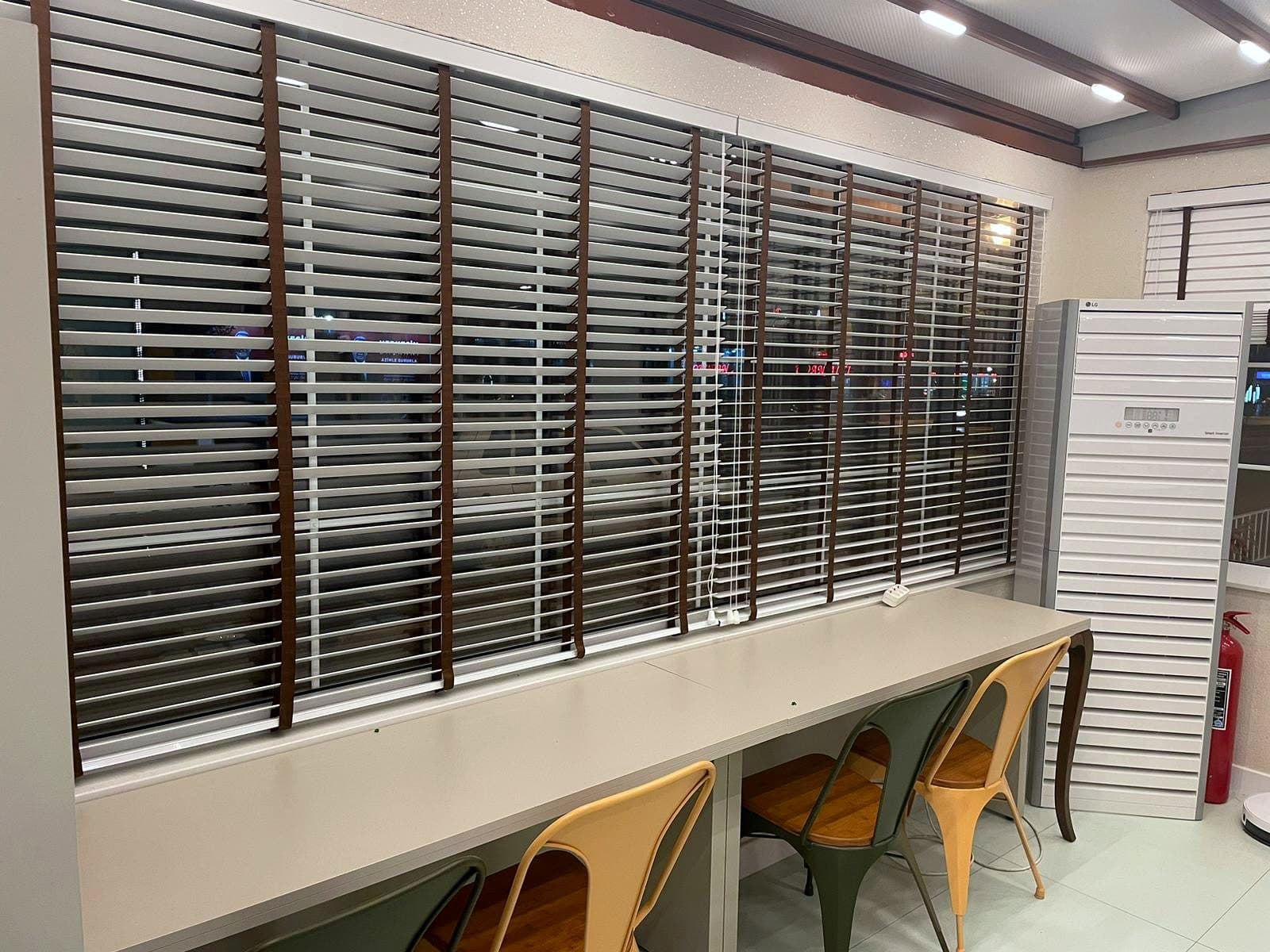
Decorative tape ladders replace the thin cords with fabric tapes running down the front of the blind. They cover the cord holes in the slats, which gives a more finished look and slightly reduces light gaps. The tape colour can match the slats for a calm look or contrast with them as a design detail, which is why tape ladders are popular in hotels, villas and classic interiors.
Tape ladders and cord ladders can be mixed within a project, for example tape ladders in suites and living rooms and cord ladders in secondary rooms.
Custom Details and Operation for Venetian Blinds
The following sections cover cut-outs for window handles, laser-cut patterns on wooden slats and the choice between manual and motorized operation.
Cut-Outs for Window Handles
Many European and Mediterranean windows have handles that stand out from the frame. A venetian blind mounted close to the glass can hit the handle when it is lowered. To avoid this, our wooden blinds can be made with cut-outs for window handles, so the slats pass around the handle and the blind sits neatly against the window.
To plan a cut-out, tell us the position of the handle when you send your sizes: which side, and its height measured from the bottom of the glass or frame. A photo of the window helps us check the detail before production.
Laser-Cut Patterns on Wooden Slats
Laser cutting turns a wooden blind into a design element. A pattern, border or logo is drawn digitally from your design and cut into the wooden slats. When the slats are closed, the pattern becomes visible as a continuous image across the blind; when they are tilted, light passes through the cut-outs and creates a play of light and shadow in the room.
This is especially effective in hotel lobbies, restaurants, spas, showrooms and boutique interiors, where the window becomes part of the brand or the interior concept. Typical designs include decorative borders, geometric or floral patterns, hotel-specific motifs and logos.
To quote a laser-cut wooden blind, send us the artwork or a sketch together with the window sizes. More details and examples are on our laser-cut blinds page.
Manual or Motorized Venetian Blinds
Every blind category we make can be supplied motorized, including wooden and aluminium venetian blinds. Manual operation is simple and works well for most windows that are within easy reach. Motorized operation is often chosen for large or high windows, for windows behind furniture or bathtubs, for hotel rooms where guests should be able to operate blinds from one point, and for homes where shading is part of a wider automation concept.
Manual and motorized versions can be combined in the same project. The motor and control option, including any connection to a building or home automation system, is agreed per project based on your electrical and control requirements. For more on motorized systems, see our motorized blinds page.
Venetian Blinds Compared and in Hotel Projects
Here we compare venetian blinds with other blind types and explain how they are used in hotel and hospitality projects.
Venetian Blinds Compared with Other Blind Types
Venetian blinds are one option among several, and many projects combine them with other products. Knowing the differences helps you choose the right blind for each room.
- Venetian vs roller blinds: a roller blind is a single fabric panel; it can be fully blackout or softly translucent, but it cannot be tilted. Venetian blinds give directional light control and a harder, architectural look, while roller blinds are flatter and more discreet.
- Venetian vs zebra blinds: zebra blinds also switch between view and privacy, using alternating sheer and opaque fabric bands. They feel softer and more textile; venetian blinds feel more structured and are easier to wipe clean.
- Venetian vs vertical blinds: vertical blinds use rotating vanes that stack to the side, which suits floor-to-ceiling glazing and sliding doors. Venetian blinds stack upwards and suit standard windows and doors.
- Venetian blinds with curtains: in hotel rooms and villas, wooden blinds are often combined with blackout or sheer curtains, so the blind handles daylight control and the curtain adds softness and full darkening.
All of these products are made in the same workshop, so different types can be quoted and delivered together in one project.
Venetian Blinds in Hotel and Hospitality Projects
Hotels choose venetian blinds for guest rooms, suites, restaurants and public areas because they are durable, easy to clean and give guests intuitive control over daylight. In guest rooms, a common solution is a wooden or faux wood blind in the window recess combined with a blackout curtain on a track, so guests can control light gradually or darken the room completely.
For hotel projects, consistency matters: the same slat colour, ladder type and operation should appear in every room of a given type. We work from your room-type schedule, produce each blind to the measured size and pack the blinds so that installation teams can work floor by floor. Faux wood or aluminium is usually specified for bathrooms and areas exposed to humidity, while laser-cut wooden blinds can give a lobby or restaurant a signature detail.
How to Measure for Venetian Blinds
Venetian blinds are made to the exact size you send, so clear measurements are essential. These guidelines help you prepare an accurate list.
Inside Mount (Recess) or Outside Mount (Face Fix)
First decide where the blind will be fixed. An inside mount sits within the window recess and gives a clean, built-in look. An outside mount is fixed to the wall or frame above the window and covers the opening, which is useful when the recess is shallow or uneven, or when better darkening is wanted.
Tell us which mount you intend and whether your sizes are the recess size or the finished blind size. That way, the right allowances are applied once, and not twice.
Measuring the Width and Height
For an inside mount, measure the width of the recess at the top, middle and bottom, and the height on the left, middle and right. Recesses are rarely perfectly square, so send all measurements or the smallest value. For an outside mount, measure the area you want the blind to cover, including the overlap around the opening.
Use millimetres and always state width first, then height. Give each window a reference, such as a room name or position code, so the blinds can be packed and installed without confusion.
Depth, Handles and Obstacles
Check that the recess is deep enough for the blind and its headrail, and that window handles, sills, tiles or radiators do not block the slats. Note any handle position for cut-outs, and send photos when you are unsure.
How to Order Venetian Blinds
These sections explain what to send for a quotation, how samples are approved, how production runs in our workshop and how dealers can order.
What to Send for a Venetian Blind Quotation
A complete request lets us prepare an accurate quotation quickly:
- Window list: width and height per window, with a reference per window, and whether sizes are recess or finished sizes.
- Material per window: real wood, faux wood or aluminium.
- Ladder type: cord ladder or decorative tape ladder for wooden blinds.
- Colours: preferred slat and tape colours, or a description of the interior so we can suggest options.
- Handle cut-outs: handle position for windows that need them.
- Operation: manual or motorized, and the preferred control side for manual blinds.
- Laser-cut patterns: artwork or a sketch, if required.
- Delivery: project address or warehouse, and the planned installation date.
You can send your request through our contact and RFQ form or by WhatsApp. If some details are still open, send what you have and we will refine the quotation as decisions are made.
Samples Before Production
Colour and finish look different in the real room than on a screen. That is why slat, ladder and tape samples are sent for approval before production starts. For projects, we recommend checking samples in the actual room light, next to floor, wall and furniture finishes. For dealers, a sample selection for showroom use can be discussed.
Production starts only after samples and final measurements are approved, so the finished blinds match what you and your customer agreed on.
Production in Our Antalya Workshop
Every venetian blind is produced in our own workshop. Slats and aluminium profiles are cut to the confirmed sizes, the blind is assembled with the chosen ladders, the operating mechanism, manual or motorized, is fitted, and each blind is inspected before it is packed and delivered.
Lead times are confirmed per order, because they depend on the materials, quantities and details such as cut-outs, tape ladders, laser-cut patterns or motorization. Deliveries can be combined or split into phases to follow an installation programme.
Venetian Blinds for Dealers
Blind dealers, retailers and window companies can order wooden and aluminium venetian blinds made to measure, with no fixed minimum order quantity. Venetian blinds can be combined with zebra, roller, vertical, pleated and Picasso blinds and outdoor zip screens in the same order, quoted per product and delivered together. Packing per end customer and labelling arrangements can be discussed.
Our wholesale blinds and dealer program page explains the process step by step. For the wooden range in particular, see our wooden blinds product page.
Care and Fire Safety for Venetian Blinds
The final sections cover basic care for wooden and aluminium blinds and how fire-safety requirements are handled per project.
Care Basics for Wooden and Aluminium Blinds
Venetian blinds need little maintenance, but the right care keeps them looking good for longer:
- Dust regularly with a soft cloth, a duster or a vacuum cleaner with a soft brush attachment, with the slats closed so you can clean one side at a time.
- Real wood: wipe with a dry or slightly damp cloth only and dry immediately; avoid soaking the slats and strong cleaning agents.
- Faux wood and aluminium: can be wiped with a damp cloth and a mild cleaning solution, which makes them practical for kitchens, bathrooms and hotel rooms.
- Tape ladders: dust gently; for stains, spot-clean carefully rather than wetting the whole tape.
- Operate gently: raise the blind fully before tilting heavily, and avoid pulling the slats by hand.
- Motorized blinds: keep the control information supplied with the project together with your building documentation.
Specific care information depends on the chosen material and finish. Ask us for it when you approve the samples, so your housekeeping or facility team has it from the start.
Fire-Safety Requirements
For hotels, clinics and public buildings, fire-safety requirements are checked per material and per project. Please tell us about any specific requirement at the quotation stage. Documents we can currently share are listed on our quality documents page.
To discuss your project, send your window list and preferred materials through our RFQ form or WhatsApp, and our export team will prepare a quotation for your venetian blinds.
How to order Wooden & Aluminium Venetian Blinds — Manufacturer for Projects and Dealers from LuxiVeil
Working with LuxiVeil follows a clear, step-by-step process, from the first enquiry to delivery at your project.
- Send your enquiry. Use the quote request form or WhatsApp and tell us about your project, quantities and the countries involved.
- Share the project details. Provide window or room measurements, the required function (blackout, light filtering, motorized control) and any design preferences.
- Choose product and fabric. Our team recommends suitable systems and fabrics for your use case, and you can request samples to confirm colour and feel.
- Approve the quotation. You receive a written quotation covering the agreed specification and project scope.
- Production and delivery. We manufacture in Antalya, Türkiye, and arrange packing and shipment to your project location.
Further reading: Window blind (Wikipedia) · WhatsApp
Need Custom Specifications or Fabric Samples?
Directly discuss technical requirements, lead times, and shipping terms on WhatsApp.
Request Samples on WhatsAppFrom our installations
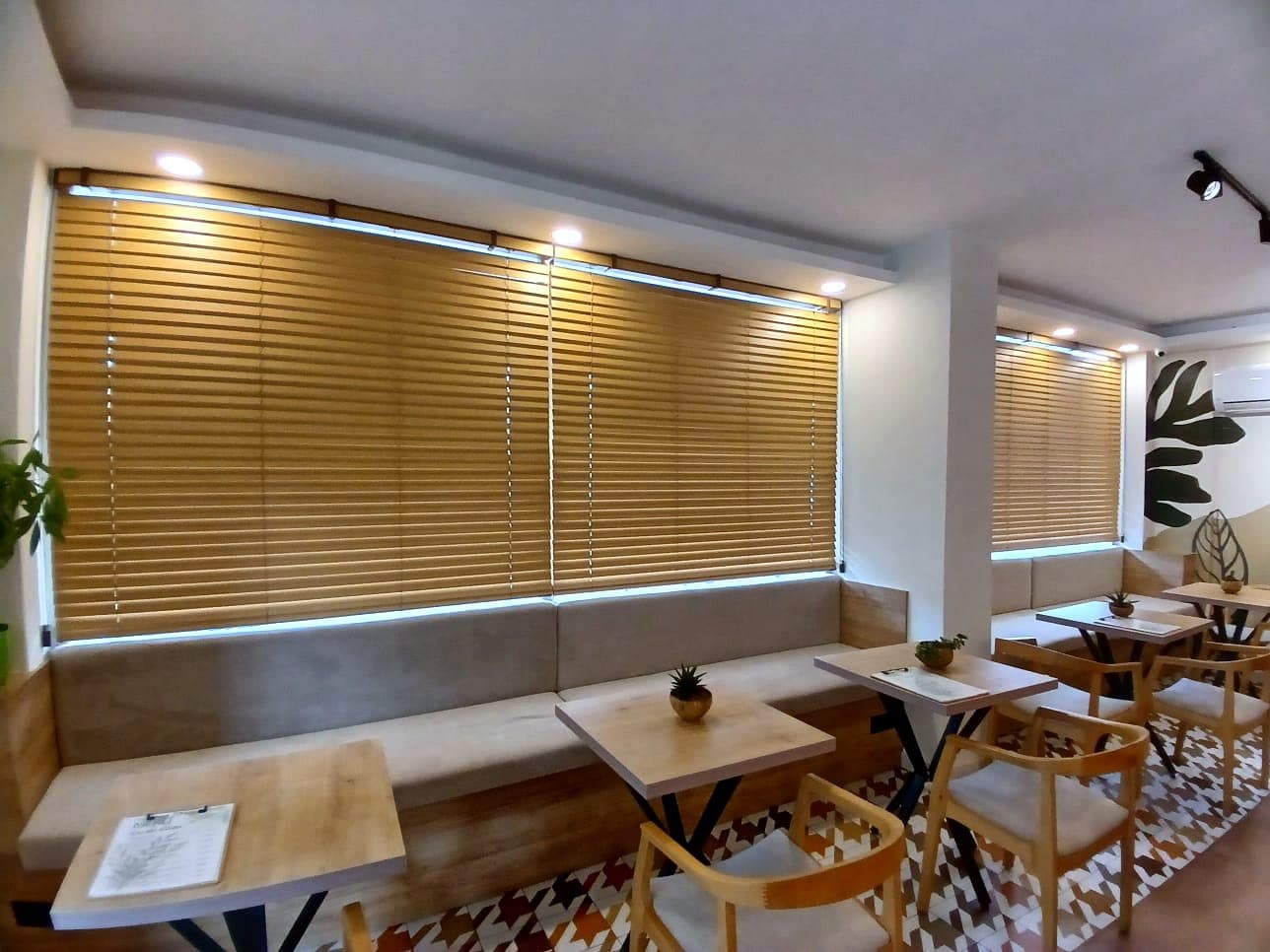
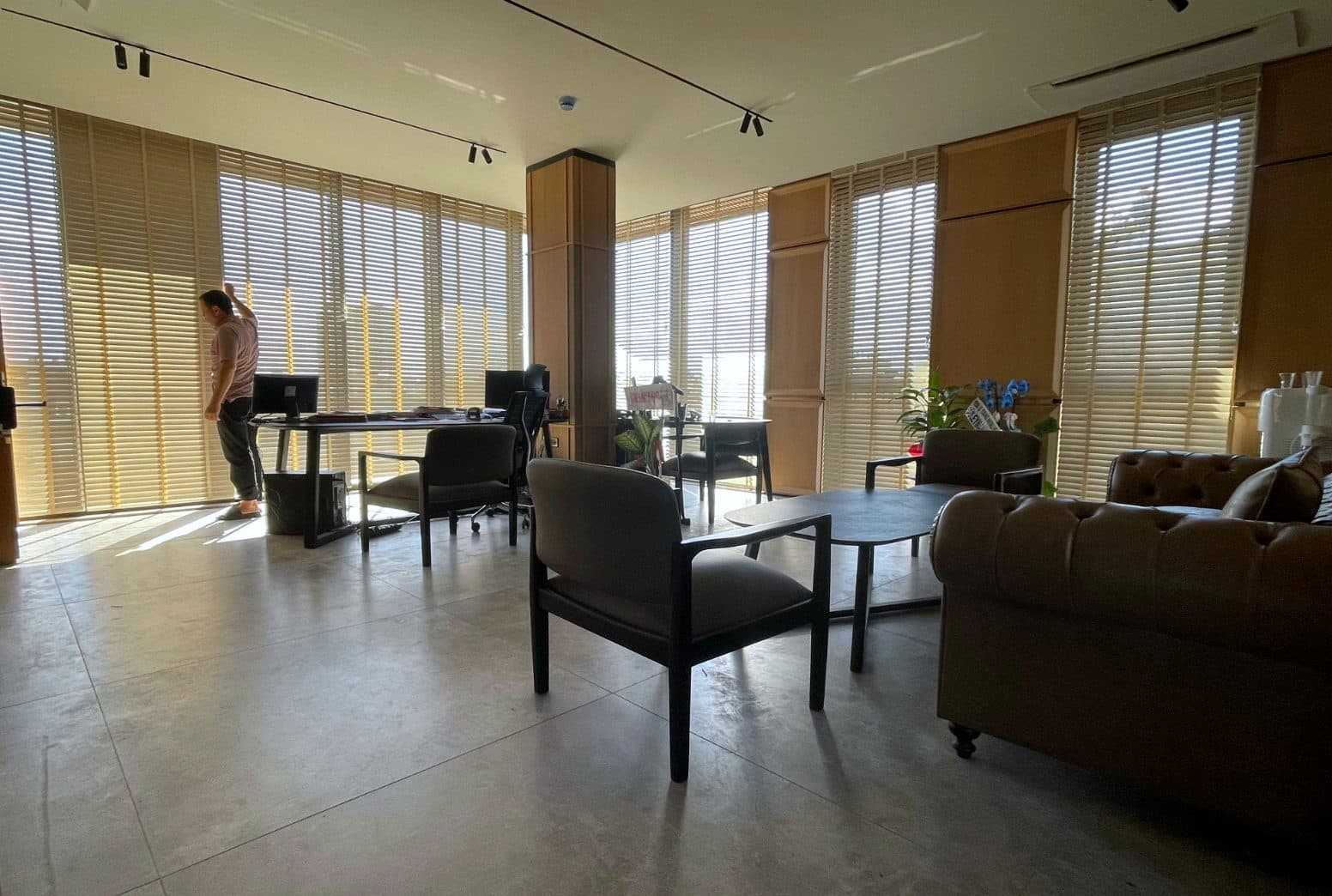
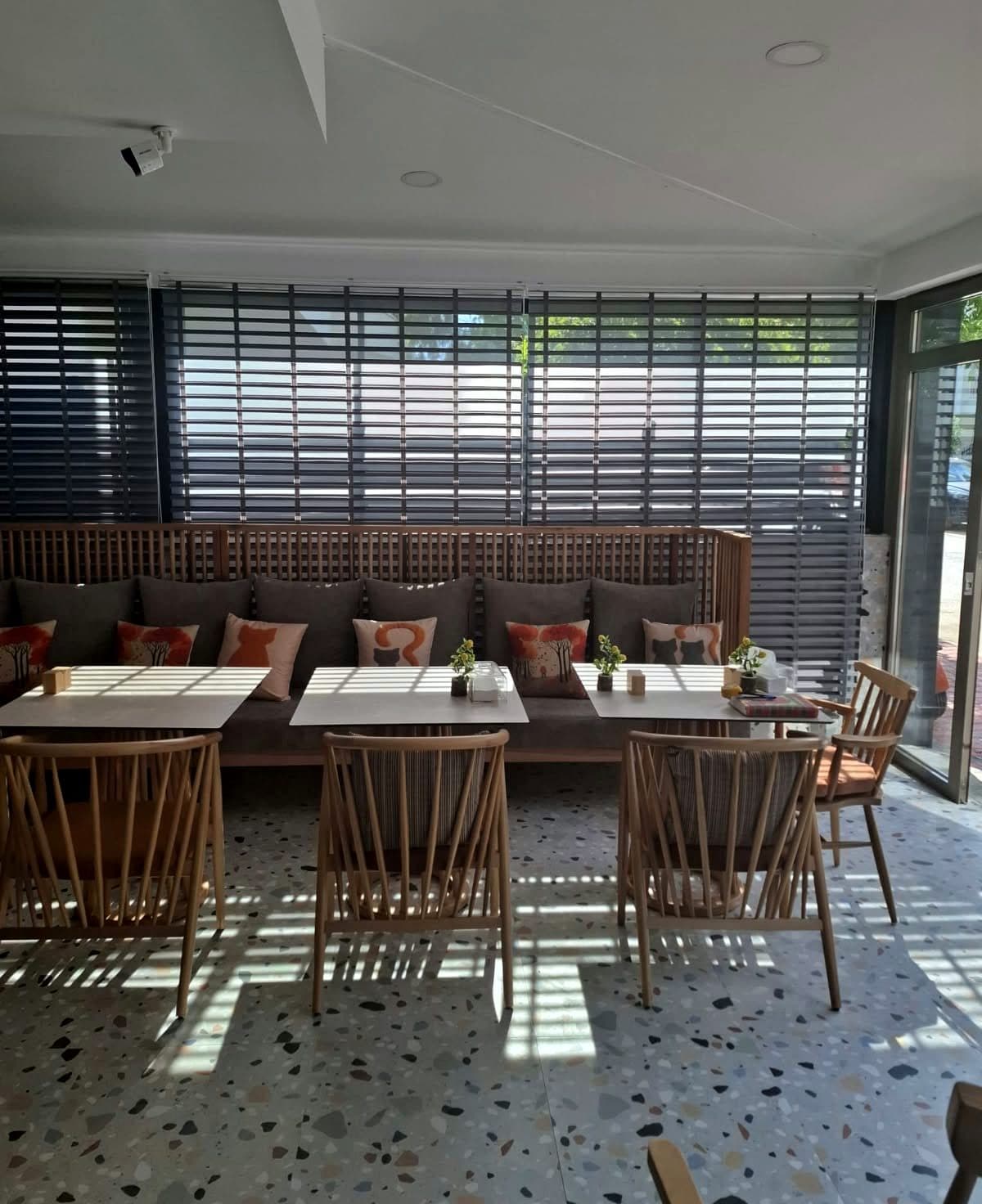
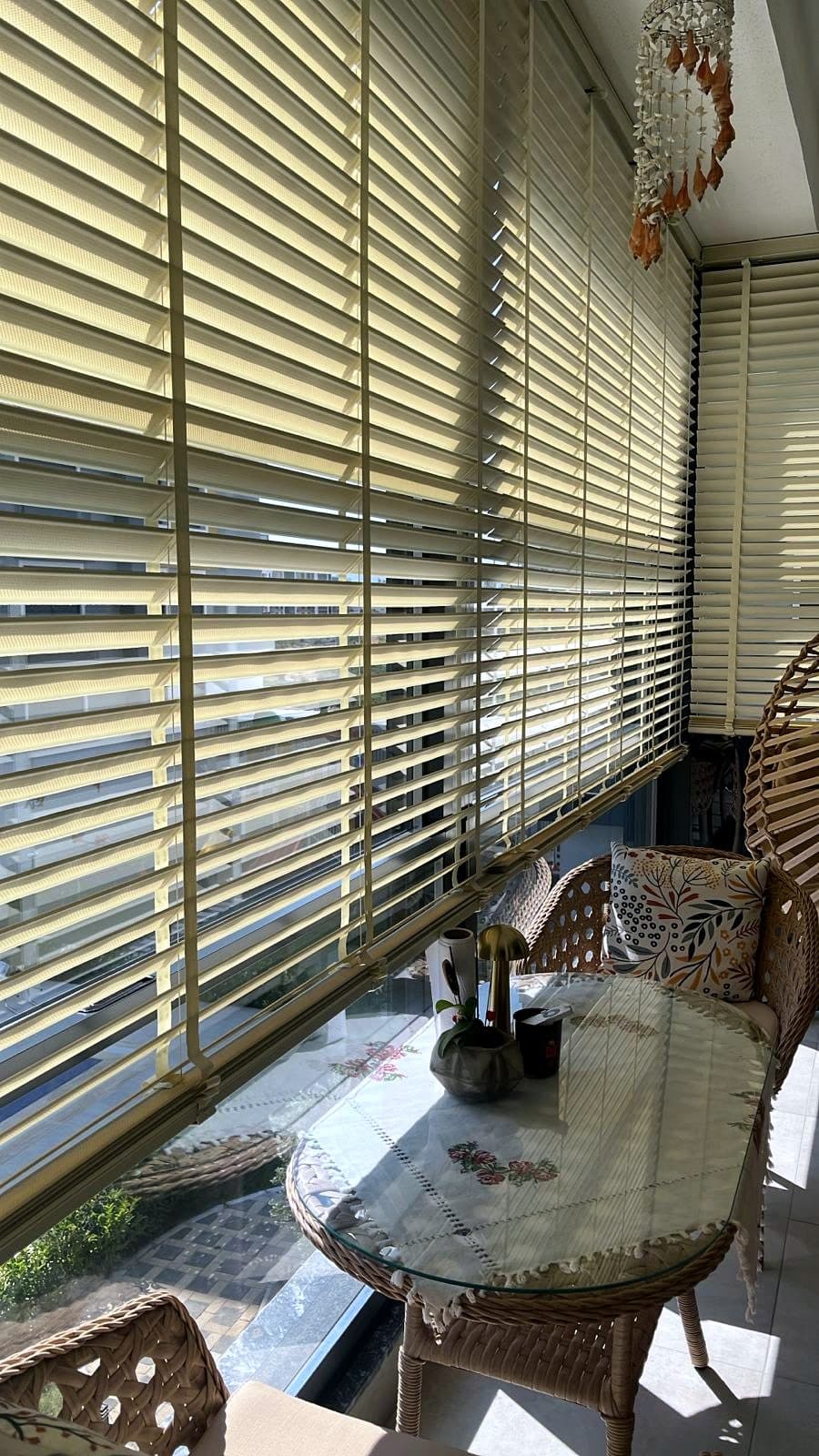
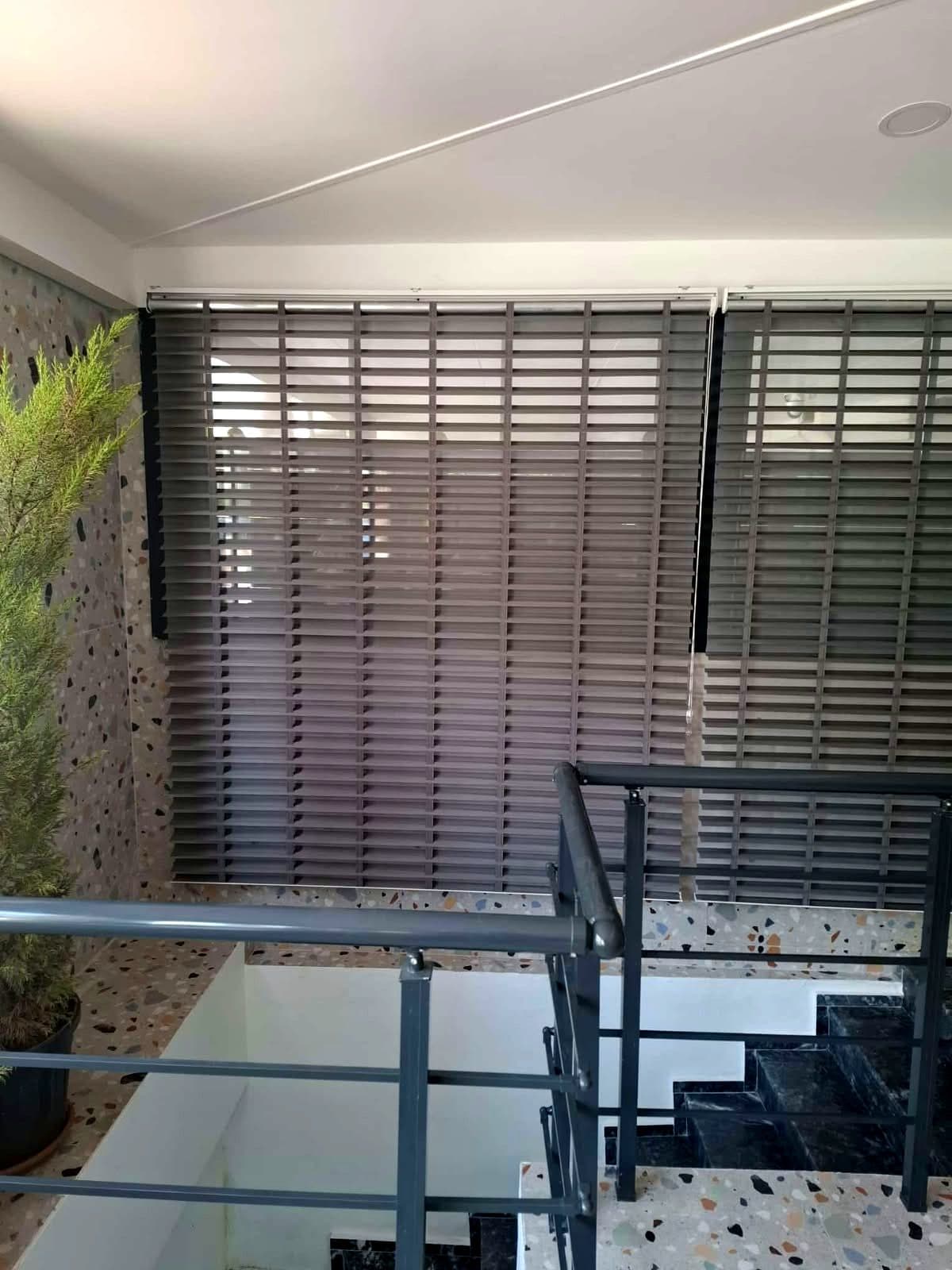
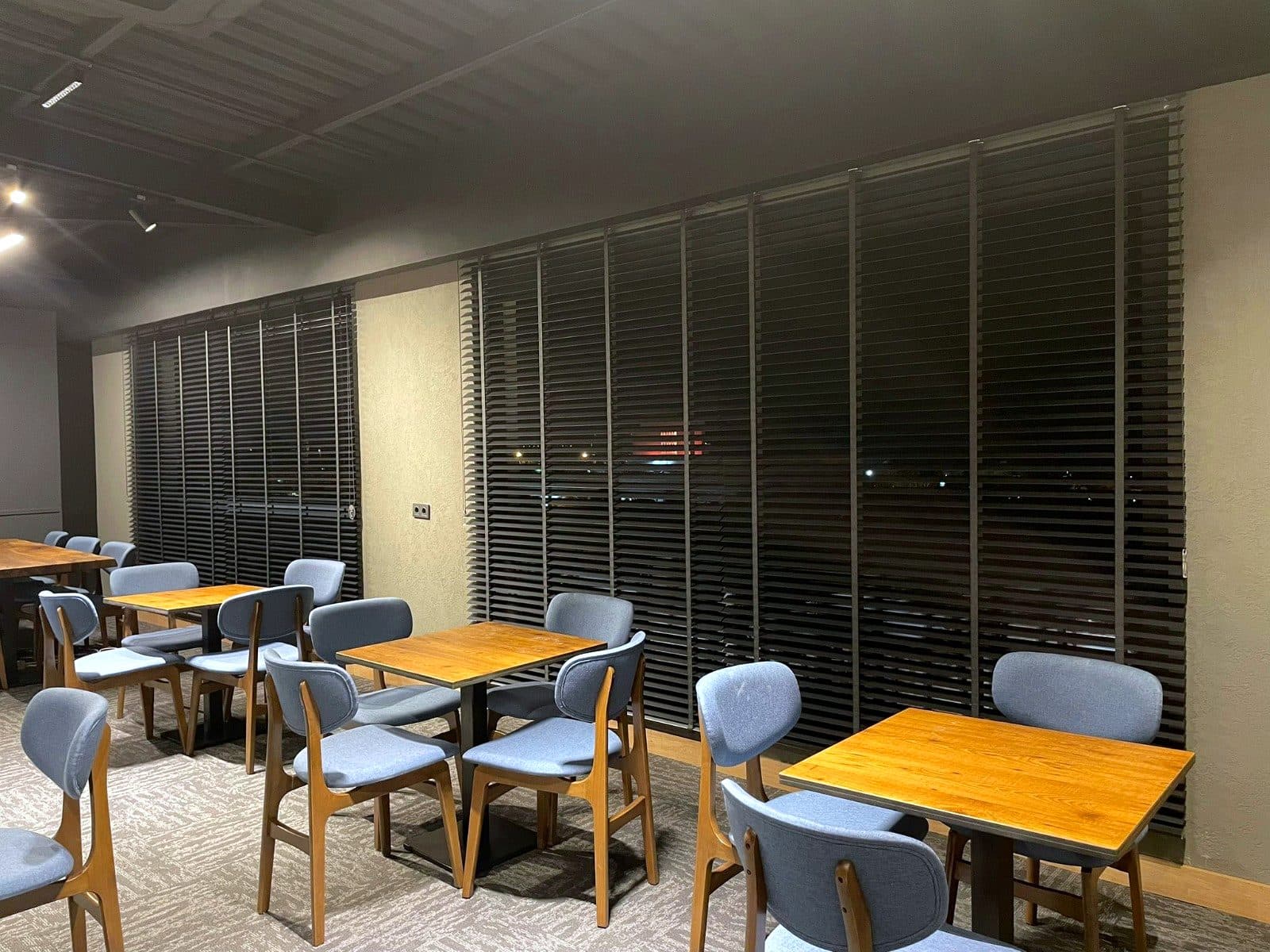
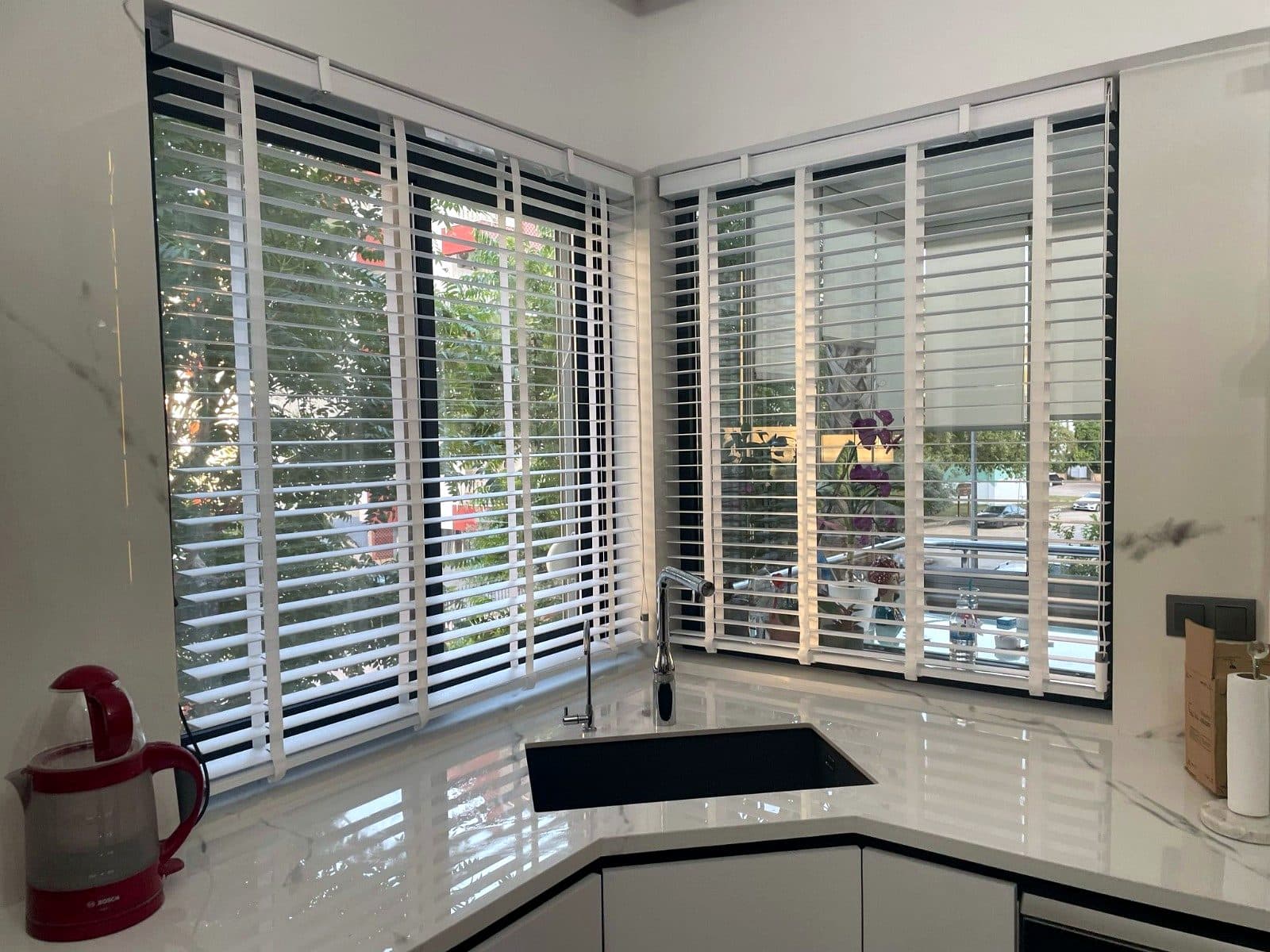
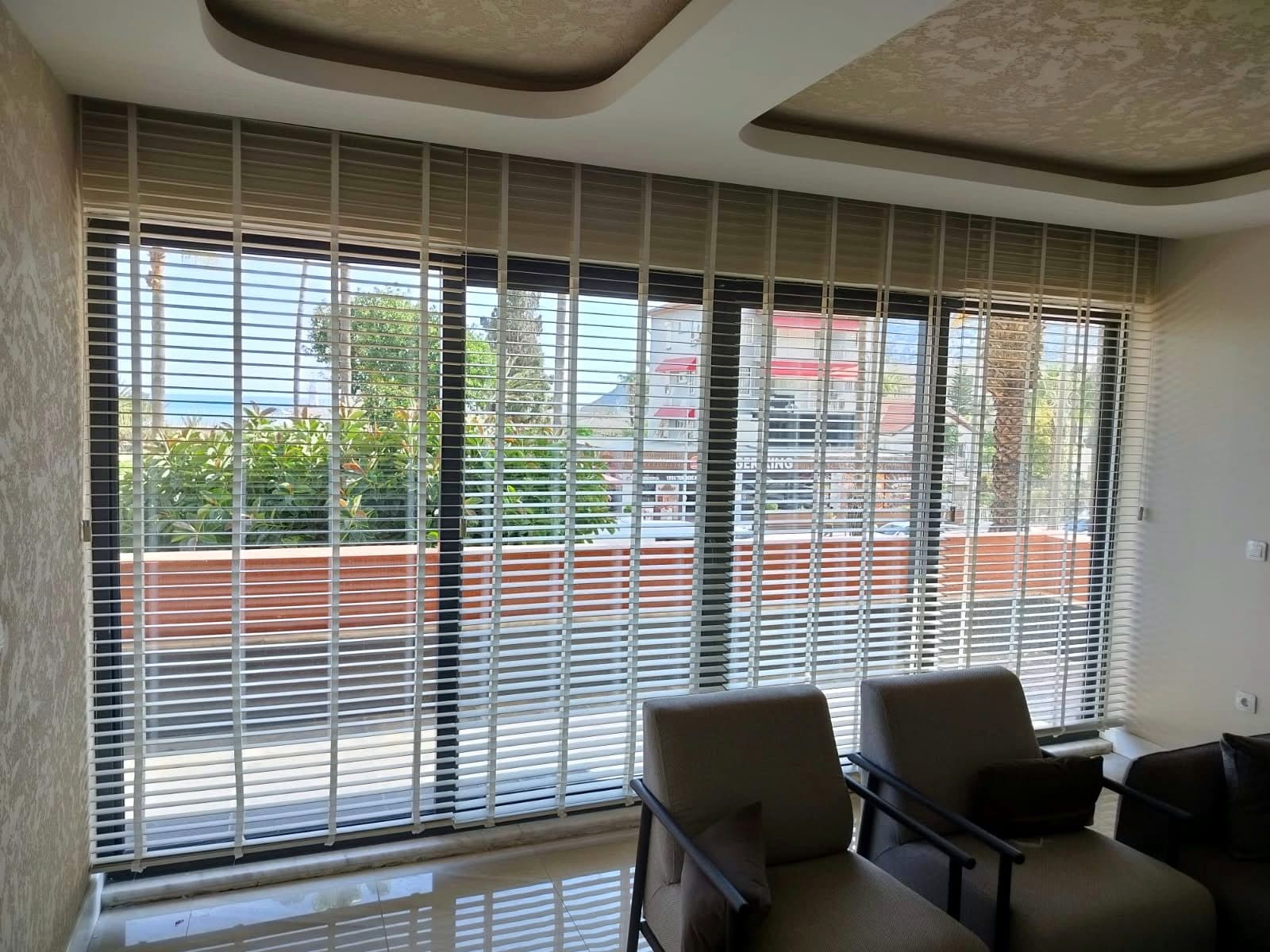
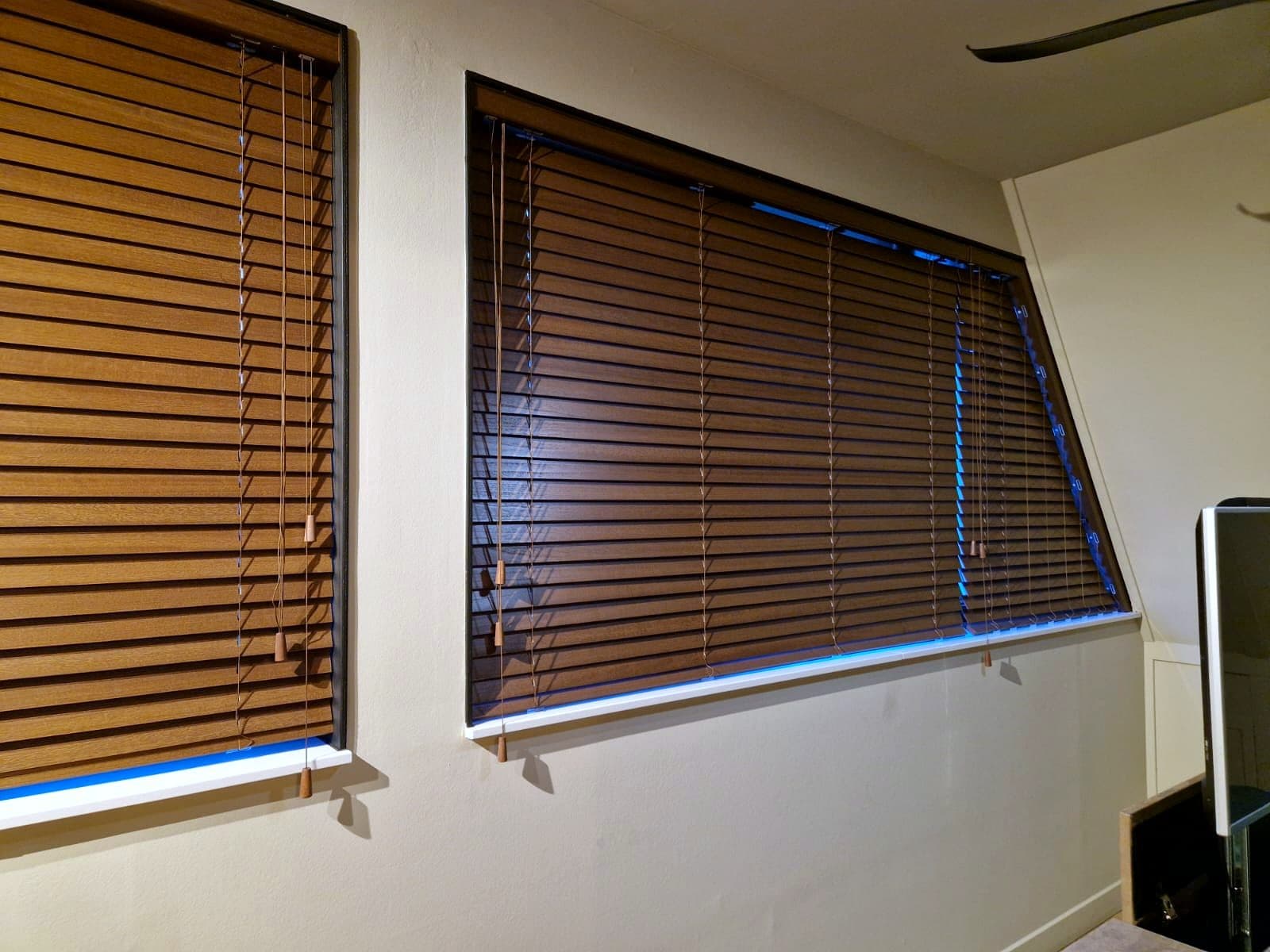
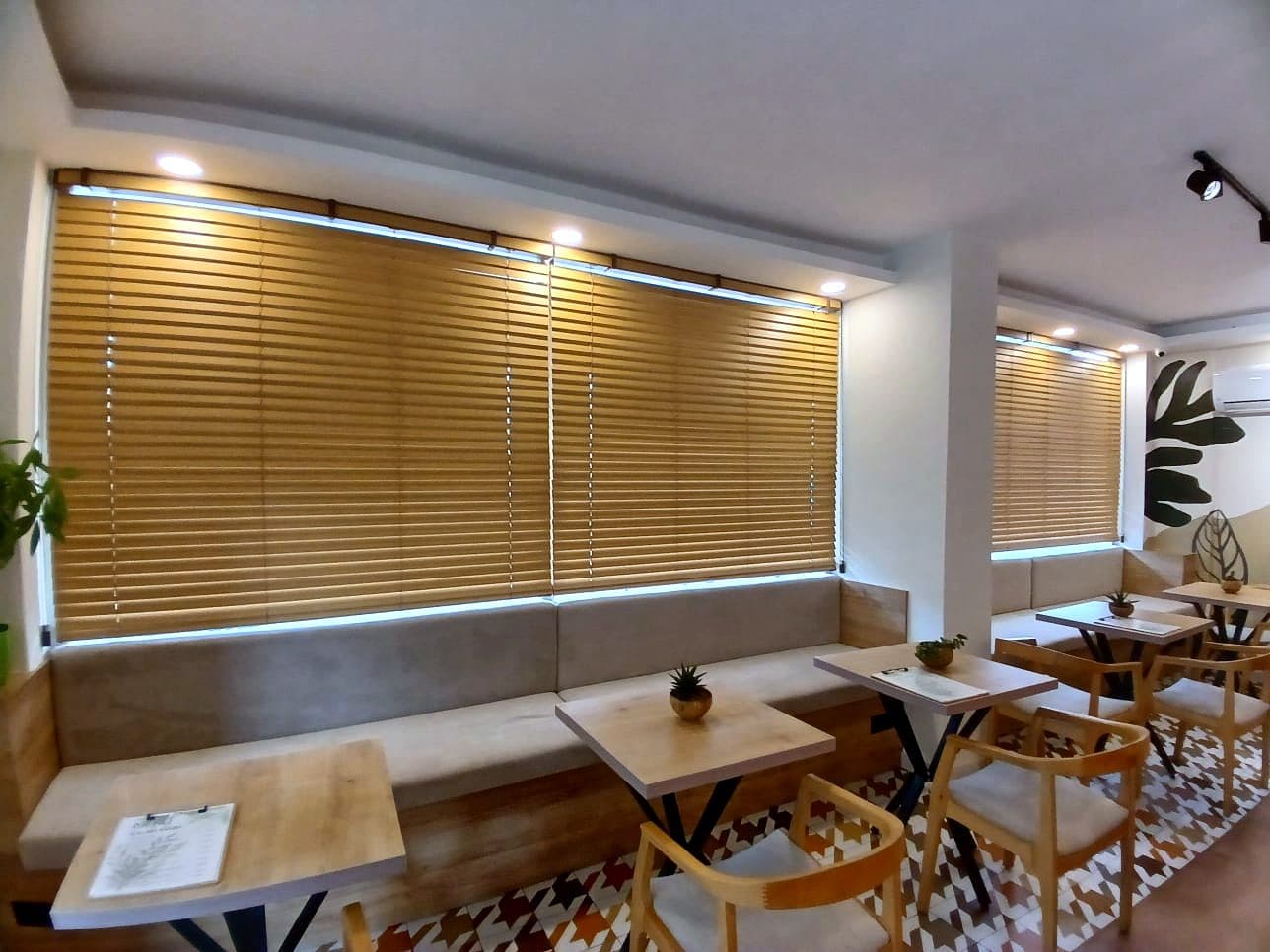
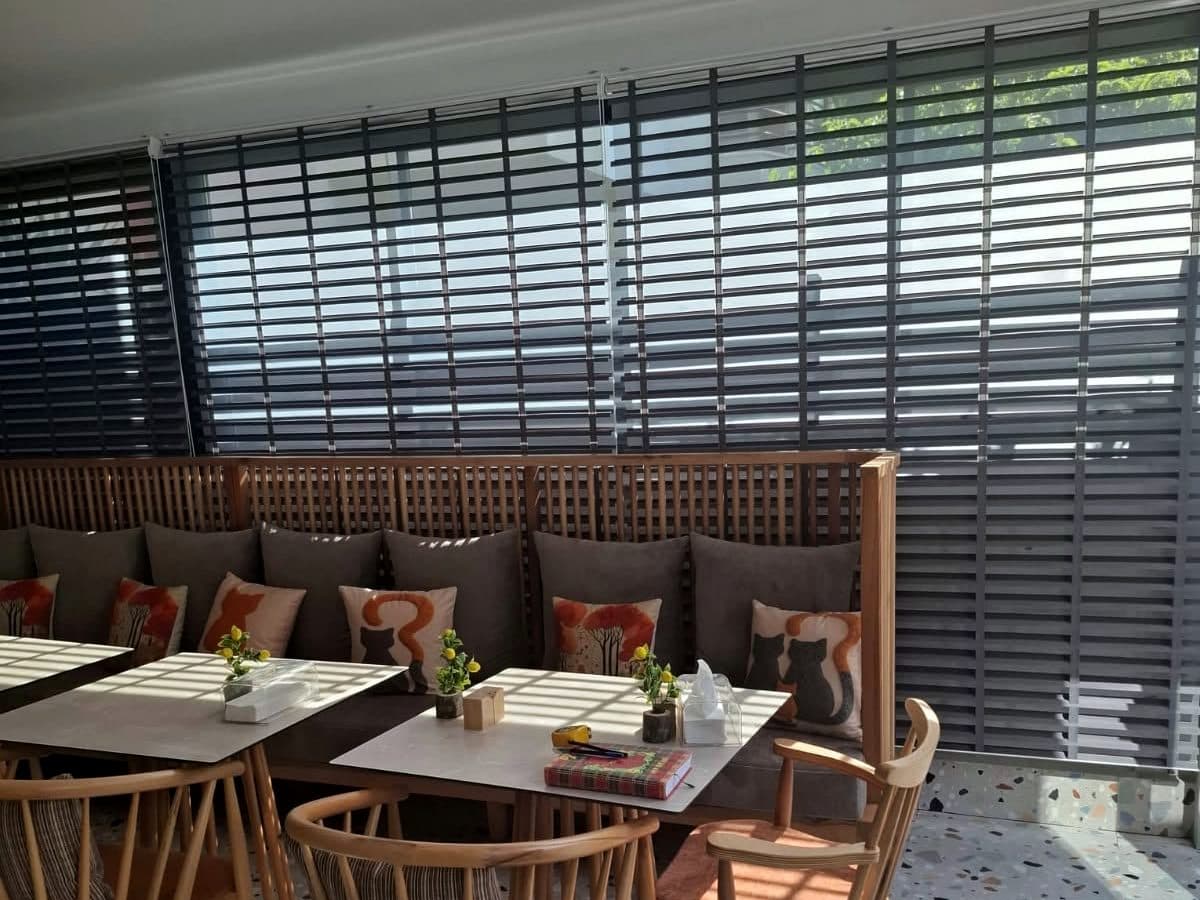
Real photographs of blinds and curtains we produced in our Antalya workshop and installed for homes, cafés, restaurants, offices and venues. Photos are only lightly colour-corrected.
Related Products
Related Services & Materials
Why buyers work with us
Since 1994
Family manufacturer in Antalya, Türkiye
Own workshop
Every blind cut and assembled in-house
Samples first
Physical fabric samples before production
Secure payment
Letter of Credit (L/C) accepted for export orders
Selected references: Titanic Hotels · Sirene Belek Hotel · COP31 Türkiye Antalya · Kadriye Luxury Garden Villaları · Anadolu Hastaneleri
Frequently Asked Questions
What is the difference between wooden and faux wood venetian blinds?
▼
Real wood blinds use natural timber slats for a warm, natural look in dry rooms. Faux wood slats look similar but resist moisture and sun better, which makes them a practical choice for humid rooms and very sunny windows.
Which venetian blind is best for bathrooms and kitchens?
▼
Aluminium blinds are the usual choice for kitchens, bathrooms and other wet areas because they resist moisture and are easy to clean. Faux wood is an alternative when a wooden look is wanted.
What slat width do your wooden blinds have?
▼
Our wooden venetian blinds are made with 50 mm slats, in real wood or faux wood.
What is a decorative tape ladder?
▼
A tape ladder replaces the thin cords that hold the slats with a fabric tape. It covers the cord holes, adds a design element and slightly reduces light gaps through the slats.
Can wooden blinds be fitted on windows with handles?
▼
Yes. Wooden blinds can be made with cut-outs for window handles, so the blind sits close to the glass without hitting the handle. Mark the handle position when you send your sizes.
Can venetian blinds be motorized?
▼
Yes. Every blind category we make, including wooden and aluminium venetian blinds, can be supplied motorized. Manual and motorized blinds can be combined in one project.
Can you laser-cut patterns into wooden blinds?
▼
Yes. Patterns, borders and logos can be laser-cut into wooden slats from your design. This is often used for hotels, restaurants and boutique interiors.
Do you sell venetian blinds to dealers?
▼
Yes. Dealers can order wooden and aluminium venetian blinds made to measure, combined with other blind types in one order, with no fixed minimum order quantity.
Can I get slat samples before ordering?
▼
Yes. Slat and ladder samples are sent for approval before production, so colours and finishes can be checked in the actual room light.
Ready to discuss your project for Wooden & Aluminium Venetian Blinds — Manufacturer for Projects and Dealers?
Contact our export team directly for fabric samples and a project-specific quote.